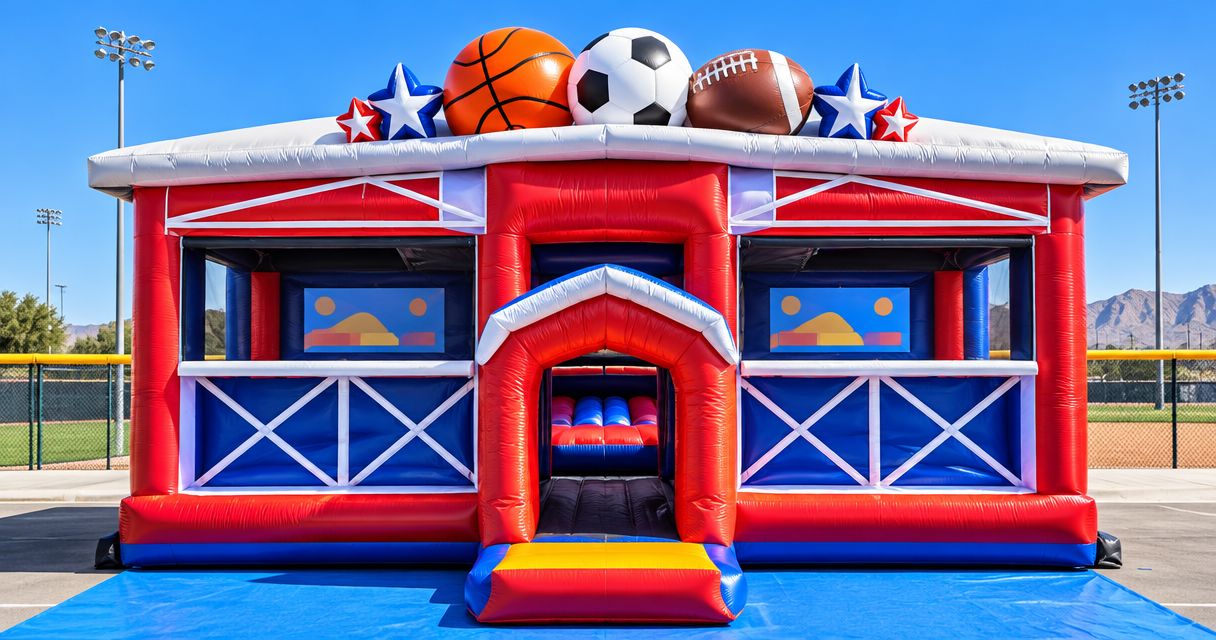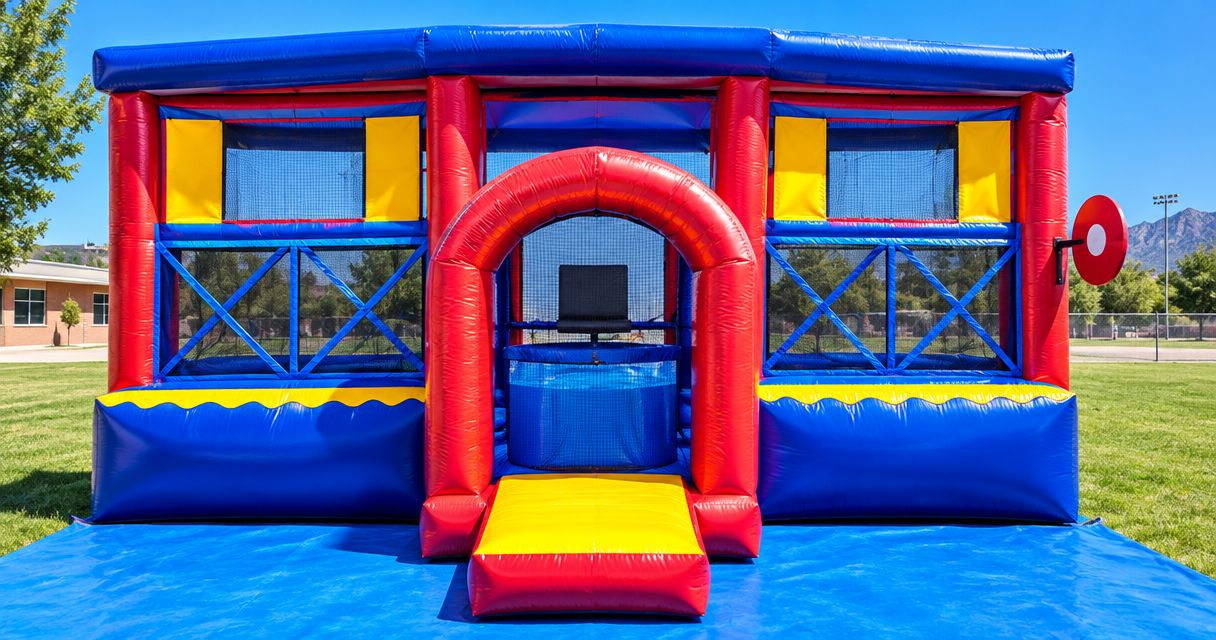
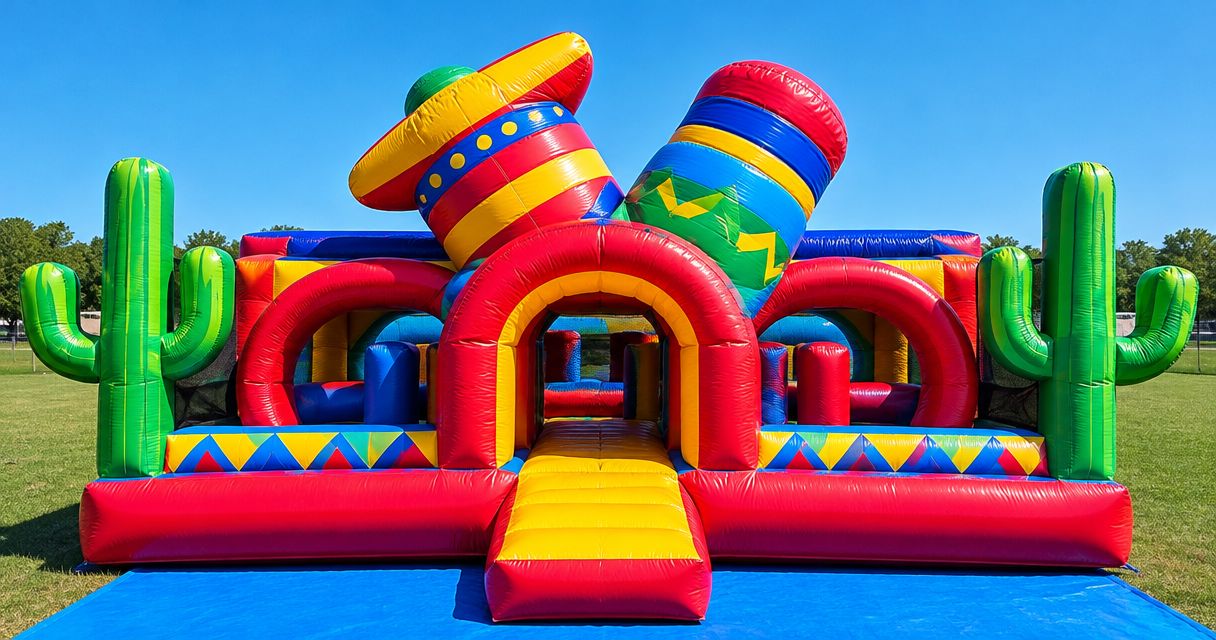
Best overall: a side-by-side racing format. Best for backyard youth parties: a compact course. Best for school rotations: a relay station. Choose obstacle course rentals for your 2026 youth event by matching the activity to your participants, usable space and supervision plan—not by choosing the longest inflatable.
- Side-by-side obstacle course rentals are the default choice for youth groups that want paired races.
- Compact courses suit backyard birthdays when the full setup area fits the site.
- Relay stations suit school rotations; extended courses need closer attention to access and supervision.
- Ask Arizona Bounce Around to confirm equipment suitability, setup requirements and delivery details in your quote.
Why this matters
A youth-group outing needs a different layout from a backyard birthday, even when both groups want an obstacle course. Parents need room for family activities; school and community organizers need clear group movement and assigned adult responsibilities.
Arizona Bounce Around offers party and carnival equipment in Phoenix. Start with your event details and ask for help matching equipment to the site, rather than treating every obstacle-course layout as interchangeable.
For a 2026 event in Phoenix, Scottsdale, Chandler or Mesa, send the actual venue address with your request. For larger events elsewhere in Arizona, confirm delivery arrangements and equipment suitability through the quote.
What makes the best obstacle course rentals?
Judge each proposed course against these criteria before comparing size or appearance:
- Participant fit: Ask for the specific unit’s age, height and participation rules. Match the activity to the group that will actually use it.
- Usable footprint: Include the inflatable, required clearances, entrance, exit and waiting area. Measure access routes separately.
- Event flow: Decide whether participants will race, take individual turns or rotate through scheduled stations.
- Supervision: Confirm who oversees participation, explains rules and manages the queue. Do not assume delivery includes event staffing.
- Site requirements: Confirm the surface, anchoring arrangements, power requirements and weather procedures with the rental company and venue.
- Group inclusion: Plan another activity for guests who do not want to race or cannot use the selected course.
The best rental is the one your group can use under the unit’s rules, with a workable entrance, exit and waiting area. A larger course does not fix a crowded layout.
Obstacle course formats at a glance
These are formats to discuss when requesting a quote, not named products or promises about a particular rental unit. Confirm the actual configuration before booking.
| Rank and format | Best for | Standout feature | Key limitation |
|---|---|---|---|
| 1. Side-by-side racing course | Youth groups wanting paired competition | Parallel routes create a clear race format | Requires suitable participants and organized starting procedures |
| 2. Compact course | Backyard birthdays and family parties | Keeps the activity focused within a smaller layout | The full setup area still needs checking |
| 3. Relay station | School field days and scheduled group rotations | Fits into an organized activity circuit | Depends on volunteers and clear handoffs |
| 4. Extended multi-element course | Larger teen and community events | Makes the course a central event activity | Requires more attention to access, layout and observation |
1. Side-by-side racing course: best for youth-group competition
A side-by-side format gives participants parallel routes through an obstacle activity. For groups that enjoy racing, the start and finish provide a simple structure that is easy to explain.
Choose this format for a youth-group social or teen birthday where paired competition is the main attraction. For your 2026 booking, confirm that the proposed unit actually supports simultaneous racing; a course’s appearance alone does not establish its operating rules.
Side-by-side racing course pros:
- Gives competitive groups a clear activity format.
- Supports paired turns when the unit permits them.
- Lets organizers build team scoring around completed races.
Side-by-side racing course cons:
- Racing is not the right activity for every guest.
- Pairings must follow the unit’s participant rules, not just friendships or team assignments.
Best for: Youth groups that specifically want head-to-head competition.
Ask how participants should enter, when the next pair can start and where finishers should go. Put the waiting group outside the exit route, and avoid placing spectators where they obstruct adult observation.
Verdict: Buy—choose this rental format when paired racing is the purpose of the event and the proposed unit fits your participants.
2. Compact course: best for backyard birthdays and family parties
A compact course makes the obstacle activity part of a family party rather than the entire event layout. It is the first format to discuss when your backyard must also accommodate food, seating and guests who are not participating.
“Compact” describes the format, not a guaranteed fit. Before requesting a unit, use the guide to measuring an event site for obstacle course rentals and record the clear space available.
Compact course pros:
- Keeps the activity concentrated in one part of the party layout.
- Suits events where guests alternate between play and family activities.
- Gives parents a focused option to discuss when space is limited.
Compact course cons:
- A smaller footprint does not establish suitability for younger children.
- Limited yard space can still leave insufficient room for access, clearances or queues.
Best for: Backyard youth birthdays and family gatherings in Phoenix, Scottsdale, Chandler and Mesa.
Measure 3 dimensions of the usable setup space: length, width and overhead clearance. Then record gate openings, turns and other access restrictions separately; an open lawn is not enough if equipment cannot reach it.
For mixed-age families, ask whether separate participation sessions are appropriate under the selected unit’s rules. Keep a non-inflatable activity available rather than expecting every child to use the same equipment.
Verdict: Buy—choose a compact format when the confirmed setup requirements leave room for the rest of your party.
3. Relay station: best for school field-day rotations
A relay station is an event format built around an obstacle course, not necessarily a different inflatable. Groups visit the station in sequence while other groups take part in separate activities.
This approach suits school celebrations, organized youth programs and corporate family events with a planned activity schedule. The important decision is how the course fits the rotation, not whether the course looks more elaborate than the other stations.
Relay station pros:
- Gives each group a defined place in the event schedule.
- Connects the course with carnival games or other activities.
- Makes volunteer responsibilities easier to assign by station.
Relay station cons:
- Requires someone to manage arrivals and departures.
- An unrealistic schedule leaves groups waiting or cuts participation short.
Best for: School and youth-program events with organized group rotations.
For a 2026 field day, assign separate responsibilities for explaining rules, managing the queue and directing the departing group. Confirm the required supervision with the provider; a volunteer checklist does not replace the equipment’s operating instructions.
Do not calculate station capacity from an assumed race time. Ask about the actual unit’s participation procedure, then build a schedule that accounts for instructions, entry, completion and exit.
Verdict: Buy—choose the relay format when your event already has a rotation schedule and adults assigned to run it.
4. Extended multi-element course: best for larger teen events
An extended course is the format to discuss when the obstacle activity will be a central attraction. Ask what obstacles the proposed unit includes rather than assuming every extended course has the same climbing, crawling or sliding elements.
This option belongs on the shortlist for larger youth gatherings and community celebrations. It also deserves the most careful site discussion: extra activity length does not automatically mean more participants can enter together.
Extended multi-element course pros:
- Provides a central activity around which to organize the event.
- Offers a course-focused option for groups seeking more than a brief turn.
- Lets planners discuss the challenge elements their participants want.
Extended multi-element course cons:
- Needs more layout attention than a smaller activity area.
- The full route needs an observation and supervision plan based on the actual unit.
Best for: Larger teen or community events with a dedicated activity area.
Send Arizona Bounce Around a site sketch before settling on an extended format. Ask for help comparing equipment, delivery access and setup needs, especially when planning a larger event outside the Phoenix area.
Verdict: Hold until the specific unit, access route, supervision needs and complete footprint are confirmed.
Turn your shortlist into a qualified quote
For obstacle course rentals, Arizona Bounce Around is best for Phoenix-area parents and planners who also need to discuss party and carnival equipment. The company’s selection includes bounce houses, water slides, carnival games, tents and concessions, so explain the whole event rather than requesting the course in isolation.
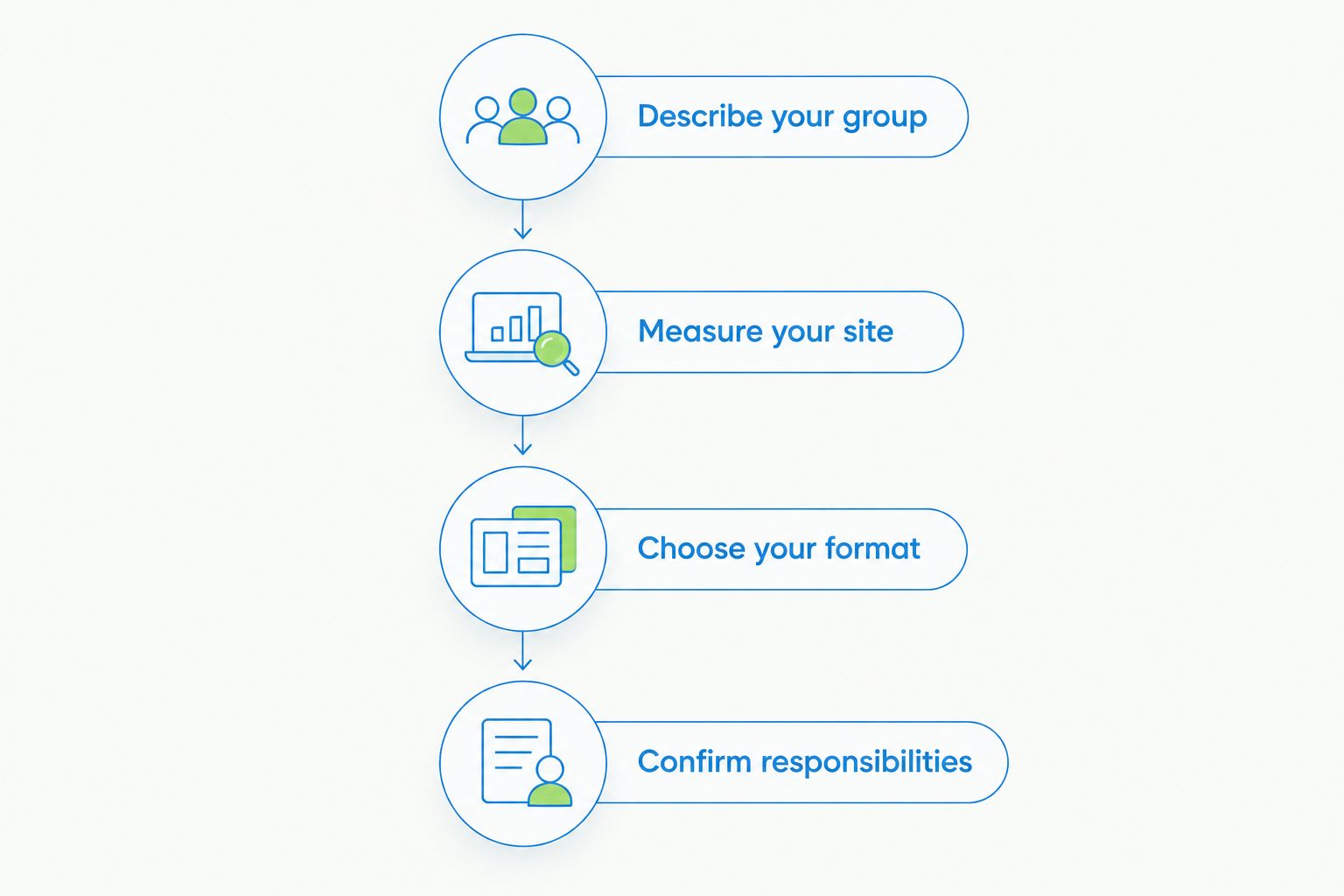
Use this sequence to prepare your 2026 request. It keeps the equipment discussion tied to the people and space involved.
- Describe your group. Give the expected participant count, age range and event type. Distinguish participants from the total number of guests.
- Measure your site. Share the usable area, surface, overhead obstructions, gate openings and route from unloading to setup.
- Choose your format. Explain whether you want paired racing, backyard play, scheduled rotations or a central course attraction.
- Confirm responsibilities. Ask what delivery and setup include, who supervises use, and what the venue and organizer must provide.
Put those details in a 1-page event brief and attach site photos. A parent can use a simple yard sketch; a school or professional planner should also identify venue contacts, access restrictions and the proposed activity area.
Ask how equipment cleaning is handled and what condition checks take place before use. For dependable coordination, get the agreed setup arrangements and organizer responsibilities in writing rather than treating a general service description as an event-specific promise.
Plan your obstacle course rental
Share your event date, participant ages and site details to discuss suitable equipment and setup.
Plan the space around the course
Keep the entrance, exit and waiting area distinct in your layout. Guests finishing a turn should not need to push through the next group to reach family seating or refreshments.
For a backyard birthday, mark where parents will watch and where food will be served. For a school, corporate or community event, identify the route between activity stations and keep it separate from vehicle access and equipment setup.
In Phoenix, discuss heat and weather procedures before the event, not during setup. Ask which conditions stop operation and who makes that decision; shade or drinking water does not replace the provider’s equipment-use instructions.
If you want tents, concessions or another activity, include them in the initial request. Each addition needs its own space and setup discussion.
How the formats are ranked
This ranking prioritizes participant fit, site fit, event flow and supervision—not unverified capacity or performance claims. Side-by-side racing is the default for competition, compact courses suit backyard planning, relay stations fit scheduled groups, and extended courses require a larger-event layout discussion.
These are planning recommendations, not a claim that specific rental models were tested. The final choice depends on the proposed unit and its operating requirements.
Which obstacle course format should you choose?
Choose side-by-side racing if your youth group wants competition and the proposed unit suits the participants. Choose a compact course when a backyard birthday must leave room for family activities.
For schools, prioritize the rotation plan before adding equipment. For a larger community event, request an extended course only after confirming the space, access and staffing arrangements.
FAQ
What's the best obstacle course rental for a youth group?
A side-by-side racing format is the default recommendation for a youth group that wants paired competition. Confirm that the actual unit supports that format and suits the participants.
Can I rent an obstacle course for a backyard birthday?
Yes, a backyard birthday is a suitable event to discuss when requesting obstacle course rentals. The proposed unit must fit the usable area, access route and required clearances.
Is a longer obstacle course better for a school event?
No, length alone does not determine whether a course fits a school event. Match the unit to participant rules, station scheduling and the supervision plan.
How much space do obstacle course rentals need?
Space requirements depend on the specific unit and its setup instructions. Request the full footprint and clearances, then allow separate room for waiting guests and movement around the activity.
What should I send Arizona Bounce Around for a quote?
Send your event date, venue address, participant count, age range and site details. Include the surface, access restrictions and preferred activity format so the equipment discussion matches your event.
Does delivery include someone to supervise the obstacle course?
Do not assume delivery includes supervision. Ask which services are included and who is responsible for operating instructions, participant management and weather-related decisions.
Can younger children and teenagers use the same course?
Follow the specific unit's participant rules rather than assuming mixed-age use is appropriate. Ask about suitable groupings and plan a separate activity for guests who cannot participate.
One last thing
Sketch the exit before you finalize the entrance. A course can fit on paper while finishers still emerge into a food line or waiting crowd. Draw the complete participant route and send it with your quote request.