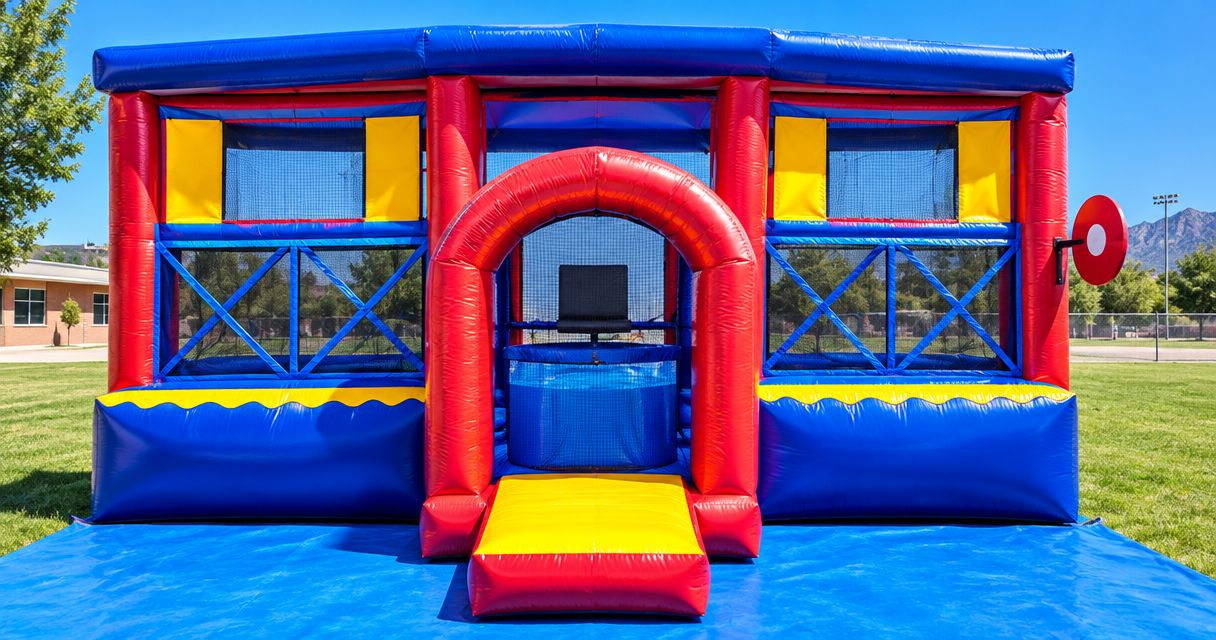
Best overall for a dunk-centered school fundraiser: a traditional dunk tank, subject to school approval and equipment requirements. Best for younger children: carnival games. Best for active play: a bounce house. Best for a water-play event: a water slide. Choose your 2026 dunk tank rental around the venue, willing participants and operating plan—not just the attraction’s name.
- Choose a dunk tank rental only after school approval, site review and agreement on operating responsibilities.
- Carnival games are the better starting point for younger children and a fundraiser without a dunk station.
- Arizona Bounce Around offers carnival games, bounce houses and water slides for mixed-attraction event planning.
- Compare written equipment requirements and quote inclusions before choosing your Phoenix school fundraiser attraction.
Why this matters
A dunk tank fundraiser needs more than someone willing to get wet. Your school must approve the activity, your venue must support the equipment, and your volunteers need clearly assigned jobs. Resolve those questions before printing tickets or announcing a teacher’s turn.
Arizona Bounce Around offers bounce houses, water slides, carnival games, tents and concession equipment. That selection supports planning a school carnival alongside backyard birthdays, family parties and community events; request a quote identifying the exact equipment you want.
For a Phoenix fundraiser in 2026, compare complete event plans rather than equipment names alone. A dunk tank, carnival game booth and water slide serve different purposes. None replaces the others automatically.
What makes the best dunk tank rental for your school?
Use these criteria before choosing an attraction:
- School approval: Get agreement on the activity, participants and required paperwork before making a commitment.
- Site fit: Confirm the equipment footprint, access route, surface requirements and surrounding operating space.
- Water plan: Ask about filling, water access and drainage for equipment that uses water.
- Operating responsibilities: Establish who runs the attraction, explains rules and manages the waiting line.
- Participant fit: Check the supplier’s written restrictions for both the person being dunked and anyone taking part.
- Quote clarity: Compare delivery, setup, collection, staffing responsibilities and any separately listed equipment or supplies.
The best dunk tank rental is the one your school can approve and operate under the supplier’s written requirements. An appealing attraction is not a workable booking until those requirements match your event.
School fundraiser attractions at a glance
These are equipment formats, not interchangeable products or a ranking of rental companies. Use the table to choose the right direction for your inquiry.
| Ranked option | Best for | Standout feature | Key limitation |
|---|---|---|---|
| Traditional dunk tank | A fundraiser centered on a willing teacher or other approved participant | The dunking activity becomes the main event | Requires school approval and a specific water, site and operating plan |
| Carnival games | Younger children and a booth-based school carnival | Separate game stations let you organize different activities | Volunteers must explain rules, handle tickets and manage prizes where used |
| Bounce house | An active-play area alongside fundraising booths | Gives jumping its own designated attraction | Requires its own operating space and supervision arrangements |
| Water slide | A fundraiser deliberately planned around water play | Makes sliding the main water activity | Requires water access, drainage planning and wet-guest arrangements |
1. Traditional dunk tank: best for a featured school participant
A traditional dunk tank puts an approved participant above a tank while players aim at a target. It fits a fundraiser built around a willing principal, teacher or other school-approved adult. Confirm the actual equipment design and operating instructions with the supplier.
Choose this format when the dunking activity is the reason people will visit the booth. Do not announce a named participant until that person and the school have agreed to the plan.
Traditional dunk tank pros:
- Gives the fundraiser a clearly defined featured activity.
- Supports a scheduled appearance by an approved participant.
- Creates a distinct booth around which you can organize ticket handling and a waiting line.
Traditional dunk tank cons:
- Depends on willing, eligible participants and school approval.
- Requires equipment-specific filling, drainage and operating arrangements.
- Does not provide a general play activity for everyone attending.
Ask who supplies the throwing equipment, who checks the setup and who is responsible for operating the attraction. Request written participant restrictions rather than assuming that a volunteer’s willingness makes them eligible.
Best for: A Phoenix school fundraiser with an approved featured participant and a suitable site.
Verdict: Hold until the school, participant and supplier have agreed on the operating plan.
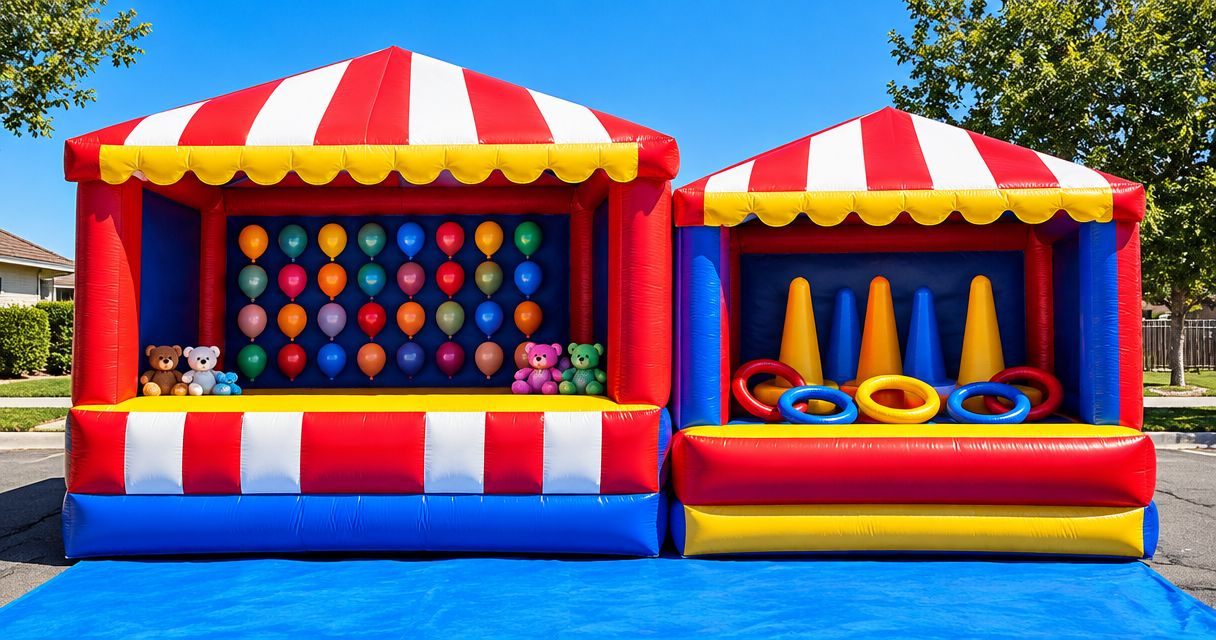
2. Carnival games: best for younger children and booth-based events
Carnival games organize your fundraiser around separate activities rather than a person being dunked. Choose games by the actions children can understand and perform, then check the individual equipment instructions. A familiar-looking game still needs clear rules.
Arizona Bounce Around offers carnival game rentals, making this a relevant category to discuss when planning a mixed-attraction school event. Request the specific game choices and requirements in your quote.
Carnival games pros:
- Let you select different activities for the children attending.
- Fit a school carnival organized around individual booths.
- Also suit backyard birthdays and family gatherings where a dunk station is not the right fit.
Carnival games cons:
- Separate stations create separate volunteer assignments.
- Prize-based games need a prize-handling plan.
- Rules and ticket arrangements must be consistent across volunteers.
For a 2026 school carnival, decide whether each game uses tickets, another school-approved entry method or open participation. Keep that decision separate from equipment selection so volunteers receive one clear set of instructions.
Use the guide to plan carnival game queues and prize stations when arranging the booth area. Keep prize collection from becoming another line across the entrance.
Best for: Younger children and schools planning several distinct game booths.
Verdict: Buy this format when your priority is a game-based fundraiser rather than a featured dunking activity.
3. Bounce house: best for an active-play area
A bounce house provides a jumping activity separate from ticket tables, food booths and seated areas. It is a different answer to the planning question: choose it when you want active play, not a substitute version of a dunk tank.
This format also belongs on the shortlist for a backyard birthday or family party. At either type of event, select equipment using the supplier’s participant rules and the actual setup space—not a photograph alone.
Bounce house pros:
- Gives active play a designated location.
- Can sit within a wider school carnival plan alongside games and concessions.
- Fits both family parties and organized school celebrations when requirements match the site.
Bounce house cons:
- Needs a dedicated area beyond the space occupied by nearby booths.
- Requires confirmed supervision and participant-management arrangements.
- Does not provide the featured-person interaction of a dunk tank.
Ask about the full setup area, access requirements, power arrangements and weather procedures for the selected unit. Keep the entrance visible to the person responsible for the activity, and confirm how participants will enter and leave.
Best for: A school carnival or family celebration that needs a separate active-play attraction.
Verdict: Buy this format for jumping; skip it as a like-for-like replacement for a dunk tank.
4. Water slide: best for a planned water-play event
A water slide makes sliding, rather than target throwing, the main activity. Choose it only when the event is deliberately organized for wet participants. Guests need to know what kind of event they are attending before they arrive.
Arizona Bounce Around offers water slides as part of its rental selection. Discuss the specific equipment, site and event format rather than assuming every water slide has the same requirements.
Water slide pros:
- Provides a water-play attraction without a featured dunk participant.
- Suits a school celebration designed around sliding.
- Also gives backyard birthdays and family parties a clear activity focus.
Water slide cons:
- Needs confirmed water access and drainage arrangements.
- Requires planning for wet guests moving through the venue.
- Does not replicate a dunk tank’s target-and-participant format.
For your 2026 event, ask where water will travel during operation and how the surrounding area must be managed. Keep the route between the slide and other activities in the site review, especially where guests will also visit food or ticket booths.
Best for: A school or family event explicitly planned around water play.
Verdict: Buy this format for a water-play celebration; skip it when the event must remain dry.
How these options are ranked
The ranking follows the job each attraction performs. A traditional dunk tank comes first for a dunk-centered fundraiser; carnival games come next for booth-based participation, followed by jumping and sliding formats with different event purposes.
The criteria are school approval, site fit, water planning, operating responsibilities, participant fit and quote clarity. This is a planning comparison, not a claim of equipment testing or a comparison of supplier performance. Choose the format first, then compare written proposals for that format.
Build a site plan before requesting your quote
Start with the location, not a list of attractions. A school courtyard, Phoenix backyard and community-event field present different access and layout questions. Your supplier needs to understand the actual proposed setup area.
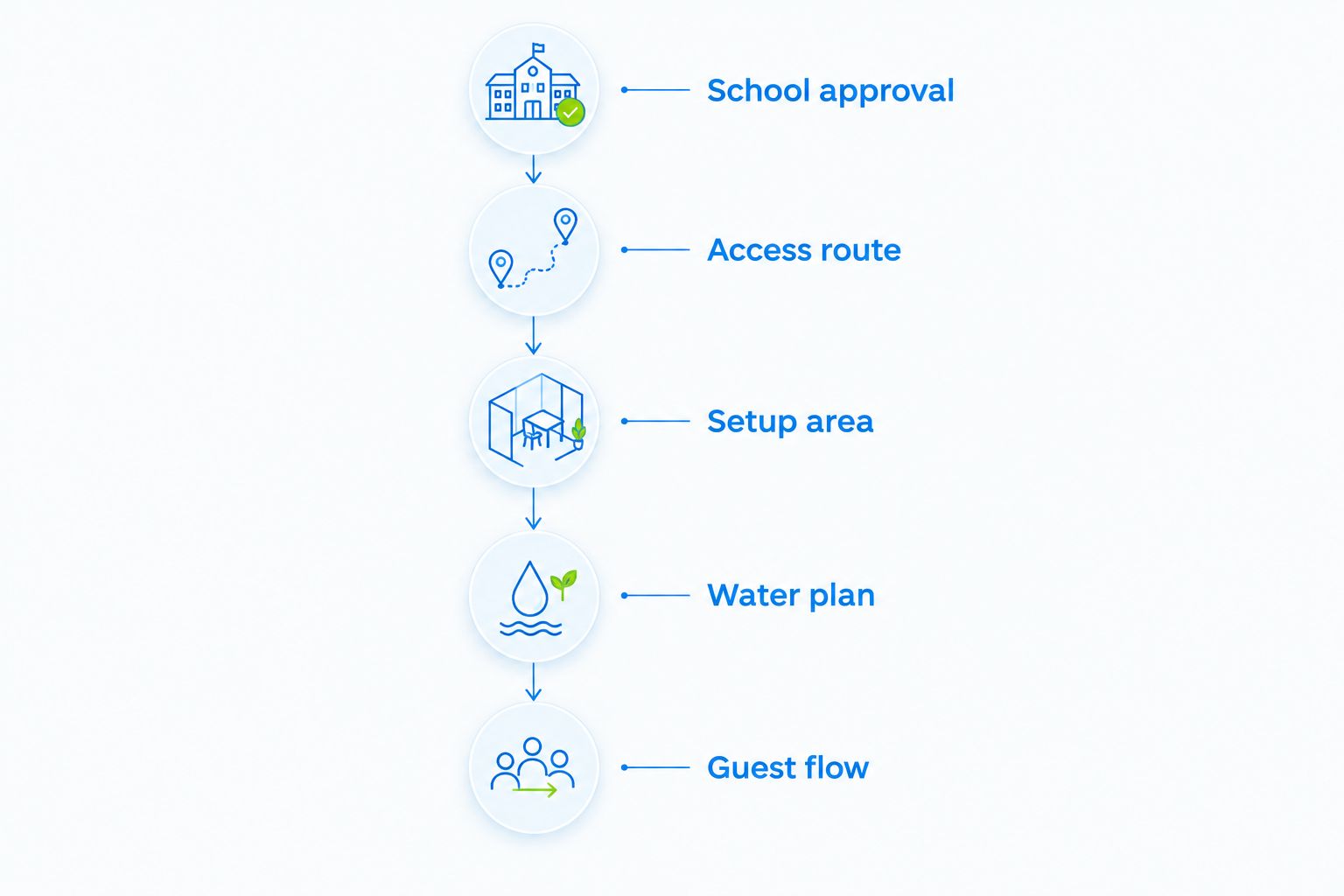
Use this sequence for the first site review:
- School approval: Identify the person who can approve the attraction and confirm the venue’s requirements.
- Access route: Trace the route from the delivery point to the proposed equipment location. Identify gates, turns and obstacles.
- Setup area: Record 3 measurements: usable length, usable width and the narrowest access opening. Ask the supplier what additional measurements are needed.
- Water plan: Locate the proposed water connection and ask the venue and supplier to agree on drainage arrangements.
- Guest flow: Draw 2 separate paths: the waiting line and the exit route. Have the supplier review the proposed layout.
These are planning steps, not equipment specifications. The selected unit’s written requirements determine whether the location works.
Assign 1 named event lead to collect questions and distribute the agreed instructions. That person coordinates the plan; the role does not replace any operator, supervisor or other responsibility required for the equipment.
Send a quote request that answers the practical questions
For a Phoenix school fundraiser in 2026, send the event date, venue address, guest age groups and preferred attraction format together. Include setup photographs and access measurements if the supplier requests them.
Ask Arizona Bounce Around to identify the proposed equipment and explain delivery and setup arrangements, equipment preparation, and the responsibilities retained by your school. For a larger event, ask for help matching games, tents and concessions to your layout rather than selecting each item independently.
Your request should cover:
- Event details: School fundraiser, backyard birthday, family party, corporate gathering or community event.
- Schedule: Venue access, planned operating period and collection arrangements.
- Equipment: Exact attraction requested and any alternatives you want considered.
- Site: Surface, gates, overhead obstructions and proposed utility access.
- Responsibilities: Operation, supervision, ticket handling and cleanup assignments.
- Written terms: Weather procedures, required paperwork and changes to the agreed plan.
For Scottsdale, Chandler or Mesa, provide the exact address rather than only the city. For larger events elsewhere in Arizona, request confirmation of delivery arrangements in the quote. Do not treat a Phoenix-based plan as a delivery commitment for another location.
Which fundraiser attraction should you choose?
Choose a traditional dunk tank when the school has approved the activity and the featured participant is central to the fundraiser. If those conditions are not met, choose a different format rather than forcing a dunk tank into the plan.
Carnival games are the default alternative for a booth-based event. A bounce house serves active play; a water slide serves a water-play celebration. For backyard birthdays and family parties, use the same distinction: select the activity guests will actually do, then check the site.
Arizona Bounce Around is a fit for school fundraiser planners comparing carnival games, bounce houses and water slides. Request equipment-specific details before deciding which format belongs at your event.
FAQ
What's the best dunk tank rental for a Phoenix school fundraiser?
The best dunk tank rental matches your school's approval requirements, site and operating plan. Confirm the exact unit, participant restrictions, water arrangements and responsibilities before booking.
Does Arizona Bounce Around rent dunk tanks?
Ask Arizona Bounce Around to confirm a dunk tank in a written equipment proposal. Its stated rental selection includes carnival games, bounce houses, water slides, mechanical bulls, tents and concession equipment.
Is a dunk tank better than carnival games for younger children?
Carnival games are the better starting point when your goal is choosing activities for younger children. A dunk tank serves a different purpose: a featured dunking activity with specific participant and operating requirements.
What should I include in a dunk tank rental quote request?
Include the event date, exact address, school approval requirements, proposed setup area and access details. Ask the supplier to identify the equipment, utility needs, delivery arrangements and operating responsibilities in writing.
How much room does a school dunk tank need?
Use the selected dunk tank's written setup requirements to determine space. Ask about the equipment footprint, surrounding operating area, waiting line, access route and overhead clearance rather than relying on a generic dimension.
Can I use the same attraction plan for a backyard birthday?
Use the same site-review process, but build the equipment plan around the backyard and guests. Confirm gates, usable space, utilities and participant requirements before choosing a dunk tank or an alternative.
What should Scottsdale, Chandler and Mesa schools confirm?
Schools should confirm delivery and setup arrangements for the exact venue address in their quote. Larger Arizona events also need an agreed access schedule, equipment layout and clear division of operating responsibilities.
One last thing
Keep the attraction’s exit on your sketch, not just its entrance. The waiting line is easy to notice during planning; the route guests take afterward deserves the same review. For your 2026 fundraiser, walk that route from the proposed attraction to the next activity before finalizing the layout.
A completed site sketch gives your school and rental supplier something specific to discuss. That is a stronger starting point than choosing equipment first and trying to fit it later.