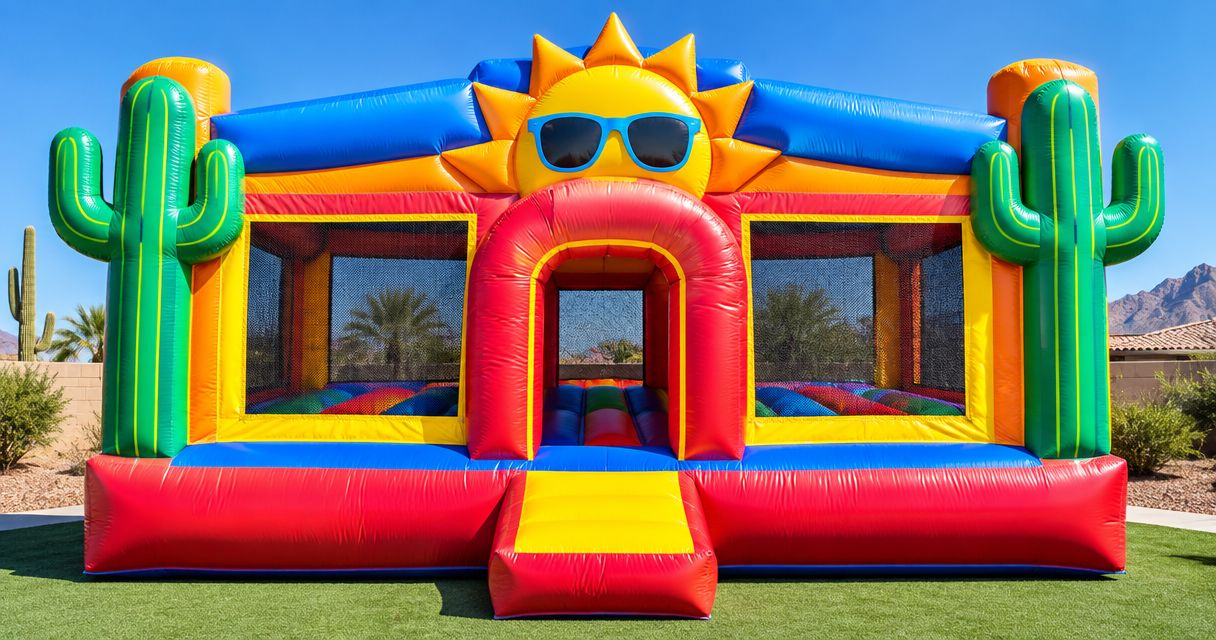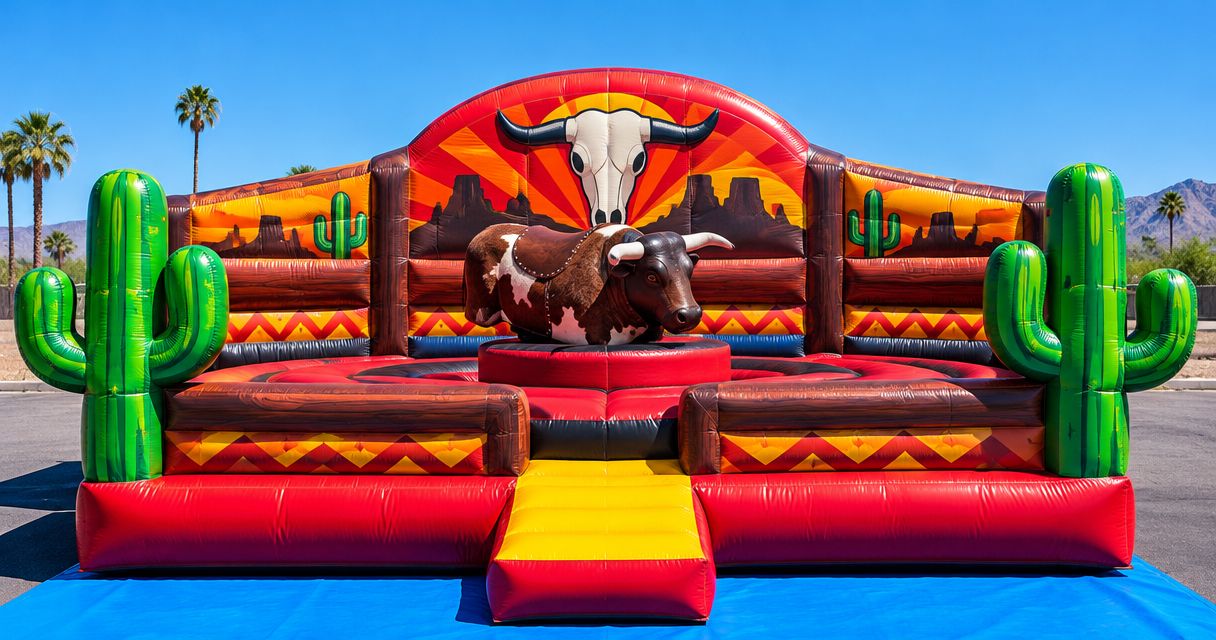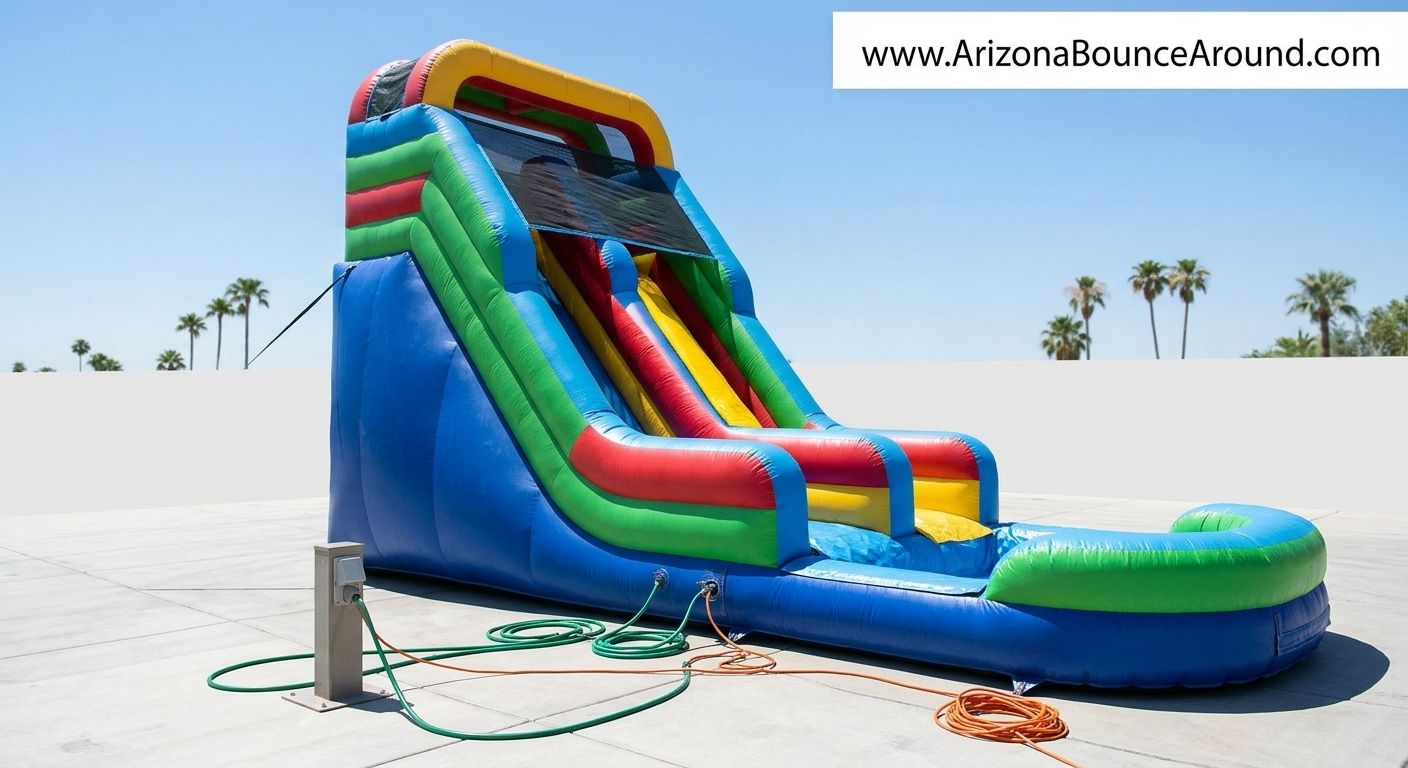
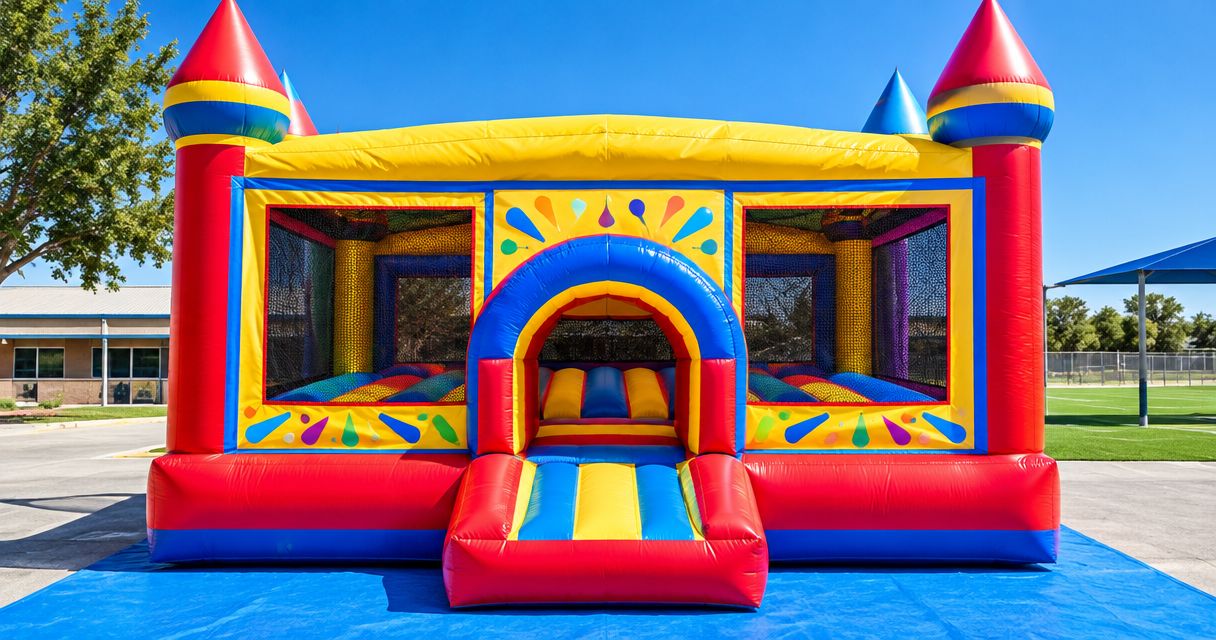
Chandler school bounce house rental planning is the process of matching inflatable equipment, campus space and event supervision to a school celebration that works for students and organizers. This guide covers equipment selection, site checks and quote details for field days, reward celebrations and family carnivals in 2026.
- Arizona Bounce Around is best for school planners comparing bounce houses and carnival games for the same celebration.
- For bounce house rentals Chandler schools request, choose equipment around student groups, campus access and operating instructions.
- Confirm setup requirements and supervision responsibilities before assigning volunteers or publishing the activity schedule.
- Request an itemized school-event quote; do not treat a backyard birthday plan as a campus event plan.
Why bounce house rentals matter for Chandler schools
A school celebration has more moving parts than a backyard birthday: student groups arrive together, activities share campus space, and volunteers need clear assignments. Choose the event format before choosing the inflatable. A rotating field-day station needs a different plan from an open family carnival.
Arizona Bounce Around is a Phoenix-based rental company offering bounce houses, water slides, carnival games, mechanical bulls, tents and concession equipment. For Chandler schools, the useful starting point is a written brief that connects equipment choices to the campus and audience—not simply a list of attractions.
A birthday host faces the same basic questions about access, power and guest suitability, but usually manages one gathering rather than class rotations. A school planner needs an additional layer: campus approval, named activity leads and a plan for students who do not participate in the inflatable activity.
Plan your Chandler school celebration in 2026
1. Define the audience and event format
Start with a shared document, not a rental selection. Write down who will attend, whether families are invited and how students will move between activities. Use separate attendance estimates for participating students and accompanying adults; total attendance alone does not describe inflatable demand.
For an elementary reward celebration, organize the brief around class groups. For an evening family carnival, describe mixed-age attendance and the other attractions competing for space. A backyard birthday or family reunion needs the same audience check, even when the schedule is informal.
Close this first planning pass with:
- Event purpose: field day, reward celebration, fundraiser or family night.
- Student groups: grades attending and how groups will be separated.
- Attendance pattern: scheduled rotations or open arrival.
- Activity choices: active play and alternatives for nonparticipants.
- Decision owner: the person authorized to approve the rental.
2. Measure the usable site and delivery route
Measure the actual activity area rather than relying on a campus map. Note overhead obstructions, nearby doors, irrigation, changes in surface and the route from unloading to setup. Ask the rental company for the selected equipment's full setup requirements, including operating and access space.
Take at least 2 site photos as a planning aid: one of the proposed setup area and one of the access route. This is a documentation suggestion, not a substitute for a site assessment. At a family home, photograph gates and narrow side yards; at a school, include service entrances and any route shared with students.
A generic layout can help you spot conflicts before equipment is selected. Keep the activity area, queue and pedestrian route separate in your draft, then have the appropriate campus and rental contacts review it.
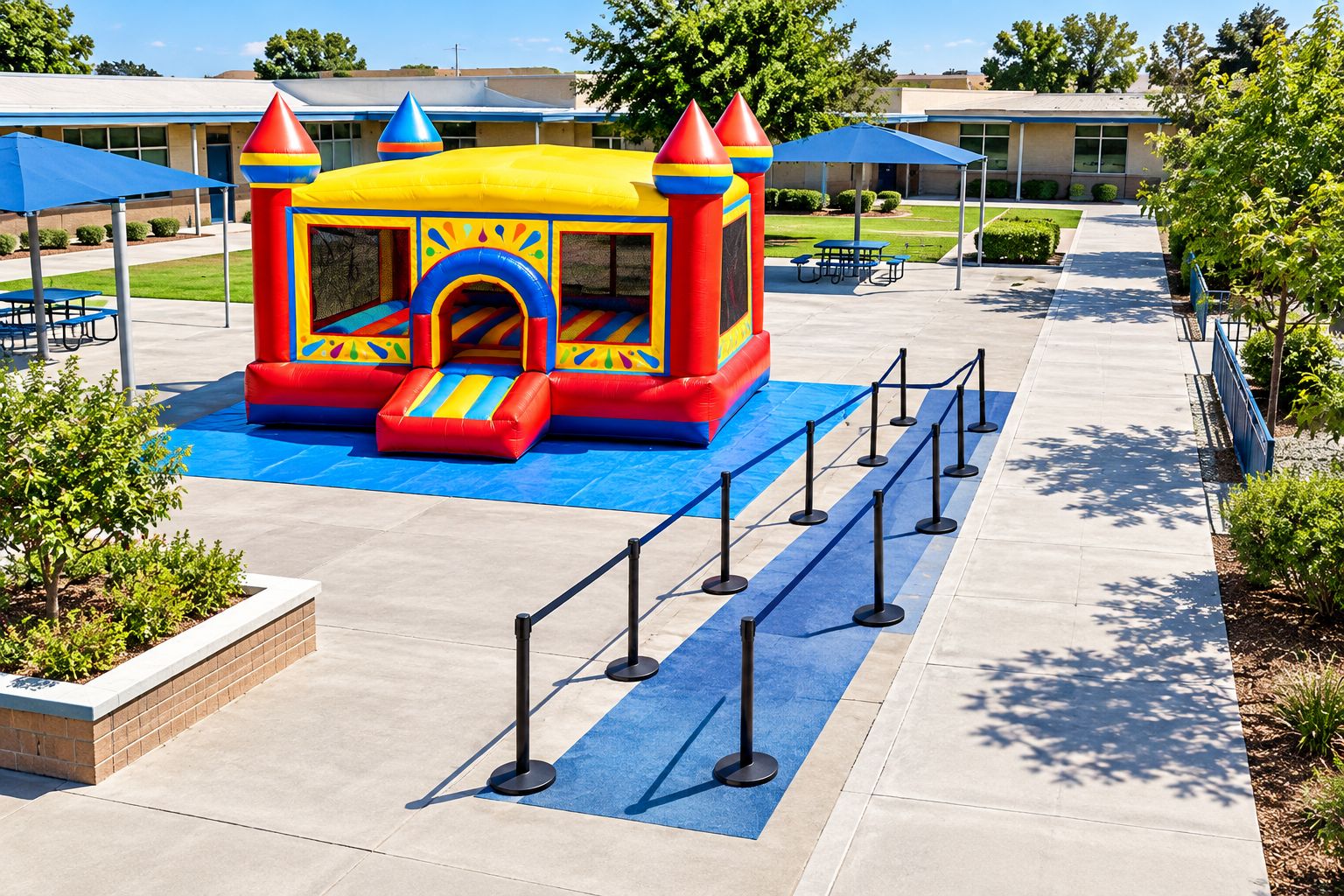
Record these details before requesting equipment recommendations:
- Usable area: measured length, width and overhead obstructions.
- Access route: gates, turns, surface changes and unloading location.
- Ground conditions: grass, pavement or another surface for review.
- Power location: available outlets for the rental company to assess.
- Campus access: emergency routes and building entrances that must remain clear.
3. Match equipment to the students and celebration
Start manually with a simple shortlist: the activity students want, the space it needs and the people required to manage it. Then ask Arizona Bounce Around to help compare equipment against that brief. Its selection spans inflatable and carnival equipment, but each proposed item still needs a separate suitability check.
A bounce house is an activity choice, not a complete event plan. Carnival games can provide another participation format; water slides add water and wet-area planning. Do not assume that equipment suitable for one age group or site is suitable for another.
For a birthday party, one main attraction can anchor the gathering while other guests socialize. For a school, corporate picnic or community celebration, consider how each activity affects queues, movement and staff assignments.
Use these selection checks:
- Request the exact equipment name and operating instructions.
- Confirm participant restrictions for each proposed item.
- Ask for the required footprint and setup conditions.
- Compare dry activities with water-based activities separately.
- Include an alternative for guests who skip active play.
4. Assign supervision and student movement
Write down who handles entry, who monitors the activity and who manages the waiting group. Ask which responsibilities belong to the rental provider and which belong to the school. Do not assume delivery and setup include ongoing operation or supervision.
Use the equipment's instructions and school requirements to determine the operating plan. Never create a rider limit from the size of the waiting class, and never use a generic online capacity figure for a specific inflatable.
Keep this in a 1-page operating sheet for each activity station. That is a suggested document format, not a staffing standard. A parent hosting a backyard party can use the same approach with a shorter guest list; a school needs named handoffs when volunteers change.
Include these assignments:
- Name the school contact responsible for the activity.
- Identify who checks entry restrictions and manages turns.
- Separate the waiting group from the activity entrance and exit.
- Explain how students move to their next station.
- Identify who stops participation when a concern arises.
5. Confirm campus requirements and weather decisions
Ask the school or district what documentation and approvals are required for the 2026 event. Requirements are site-specific; a previous birthday booking or another school's event does not establish permission for your campus.
Review weather procedures with both the campus and rental company. Ask for the selected equipment's operating limits and stop-use instructions rather than choosing your own thresholds. Shade and drinking-water arrangements also belong in the campus plan, separate from the equipment booking.
For Phoenix, Scottsdale, Chandler and Mesa events, give the provider the actual address rather than relying on a city name. For larger events elsewhere in Arizona, confirm delivery arrangements and equipment availability through the quote.
Resolve these questions before approval:
- Which campus or district approvals apply?
- What insurance documents does the school require?
- What surface and anchoring arrangements need approval?
- Who monitors conditions and makes stop-use decisions?
- What are the written weather, cancellation and rescheduling terms?
6. Request a quote that describes the whole job
Send the same written brief to everyone reviewing the rental. Include the event date, address, audience, access details and proposed equipment. A useful quote separates what is included from what the school must provide.
Ask Arizona Bounce Around about delivery and setup, equipment cleaning procedures and help coordinating a larger event. Confirm those details in writing for the actual booking. Dependable execution starts with agreed responsibilities, not assumptions about what a rental normally includes.
Build in a suggested 15-minute volunteer briefing before guests arrive, subject to your school's schedule. That meeting is for reviewing assignments and escalation contacts; it does not replace equipment-specific instruction or any required training.
Ask the quote to identify:
- Exact equipment and any proposed substitutions.
- Delivery, setup, event-use and collection arrangements.
- Power, water and site requirements, where applicable.
- Included staffing and school-provided responsibilities.
- Written terms and the process for approving changes.
7. Check the final layout before event day
Review the 2026 event plan with the campus lead and rental contact before sending the final volunteer instructions. Compare the approved equipment against the latest layout, not an early sketch that predates other booths or attractions.
For a school carnival, check whether concessions, ticket collection and pedestrian traffic have changed the available space. For a family party, make the equivalent check after placing tables, chairs and food. Corporate and community events need the same coordination when several vendors share the site.
Keep the final review focused:
- Confirm the equipment matches the approved quote.
- Recheck access and unloading arrangements.
- Keep entrances and emergency routes unobstructed.
- Share the operating sheet with assigned volunteers.
- Give organizers the correct event-day contact details.
Compare equipment options for school and family events
The best option depends on participation style and site requirements, not simply which attraction looks largest. Use this comparison to narrow the brief, then confirm the selected equipment's instructions and requirements with the provider.
| Option | Best for | Main benefit | Key limitation |
|---|---|---|---|
| Bounce house | Class celebrations and backyard birthdays built around bouncing | Gives the event a clear active-play station | Requires equipment-specific participant rules and managed entry |
| Carnival games | School carnivals, family gatherings and community booths | Adds separate activity choices alongside an inflatable | Each game still needs space, instructions and an assigned organizer |
| Water slide | Events deliberately planned around water play | Provides a water-based activity format | Adds water access, drainage and wet-area planning |
| Bounce house with carnival games | School family nights and larger mixed-activity gatherings | Combines different ways to participate | Requires more layout coordination and separate station responsibilities |
Arizona Bounce Around is best for school planners comparing bounce houses and carnival games for the same celebration. Its wider equipment selection helps frame that discussion, but a broad catalog does not establish that every item suits your students, campus or event date.
Plan your school rental request
Prepare your date, campus address, student groups and site details before discussing equipment.
Common mistakes Chandler school planners make
Copying a backyard birthday plan
A birthday checklist is a useful starting point, but it does not cover class transitions or campus approvals. Add the school's requirements, group movement plan and named station leads before treating it as a school-event brief.
Treating the class size as equipment capacity
An entire class arriving at once does not mean the class can participate at once. Use the selected equipment's restrictions to plan turns, and give waiting students an organized place or another activity.
Assuming setup means supervision
Delivery, setup, operation and supervision are separate responsibilities. Have the quote identify each one, then assign any remaining school duties before recruiting volunteers.
Adding water play after approving the layout
A water slide changes more than the equipment list. Review water access, drainage, changing arrangements and pedestrian routes before adding it to a dry-event plan.
Promoting attractions before the booking is confirmed
Keep draft equipment choices out of final family communications until the school and provider have agreed on the booking. For your 2026 celebration, publish the confirmed activity plan rather than a wish list.
FAQ
What's the best bounce house rental for a Chandler school celebration?
The best choice is equipment that matches your student groups, approved campus space and supervision plan. Ask for the exact item's participant restrictions, setup requirements and operating instructions before choosing.
Can a school use the same rental plan as a backyard birthday?
A school needs additional planning for campus approval, class movement and volunteer responsibilities. Both events need equipment-specific site and participation checks, but a birthday plan alone does not cover a school celebration.
Does bounce house delivery include someone to supervise students?
Do not assume delivery includes supervision. Ask the provider to state who handles setup, operation, entry control and participant monitoring, then assign the school's remaining responsibilities.
What should I send when requesting a school-event quote?
Send the event date, campus address, student groups, attendance pattern and proposed equipment. Include site measurements, access photos, power details and any school documentation requirements.
Is a water slide better than a dry bounce house for a school event?
A water slide fits an event specifically planned for water play; a dry bounce house avoids the added water and wet-area arrangements. Choose based on the event format and approved site requirements rather than appearance alone.
How do I compare bounce house rental quotes without relying only on price?
Compare the exact equipment, delivery and setup arrangements, staffing responsibilities, site requirements and written terms. A quote that leaves those details unclear is not ready for approval.
What happens if weather affects our school celebration?
Follow the selected equipment's operating instructions and the agreed school and provider procedures. Confirm stop-use responsibilities and written cancellation or rescheduling terms before the event.
One last thing
Draw the waiting area before approving the inflatable location. The equipment footprint alone does not show where a class lines up or how families reach the next activity. Bring that sketch to the final planning conversation with Arizona Bounce Around so the quote and layout describe the same event.