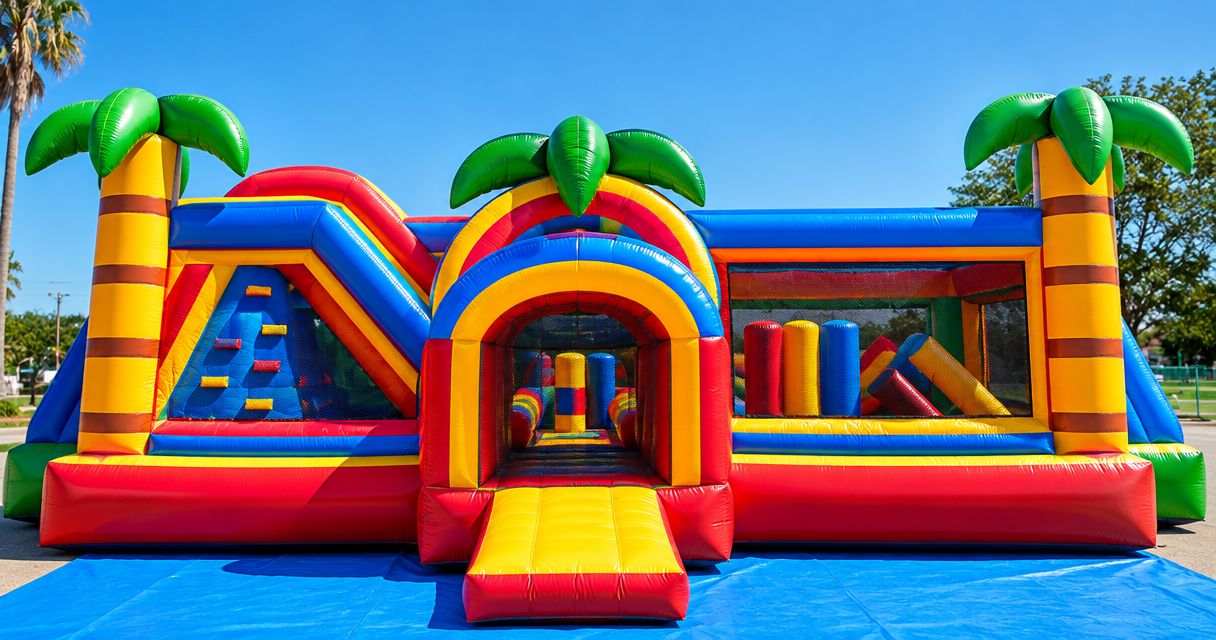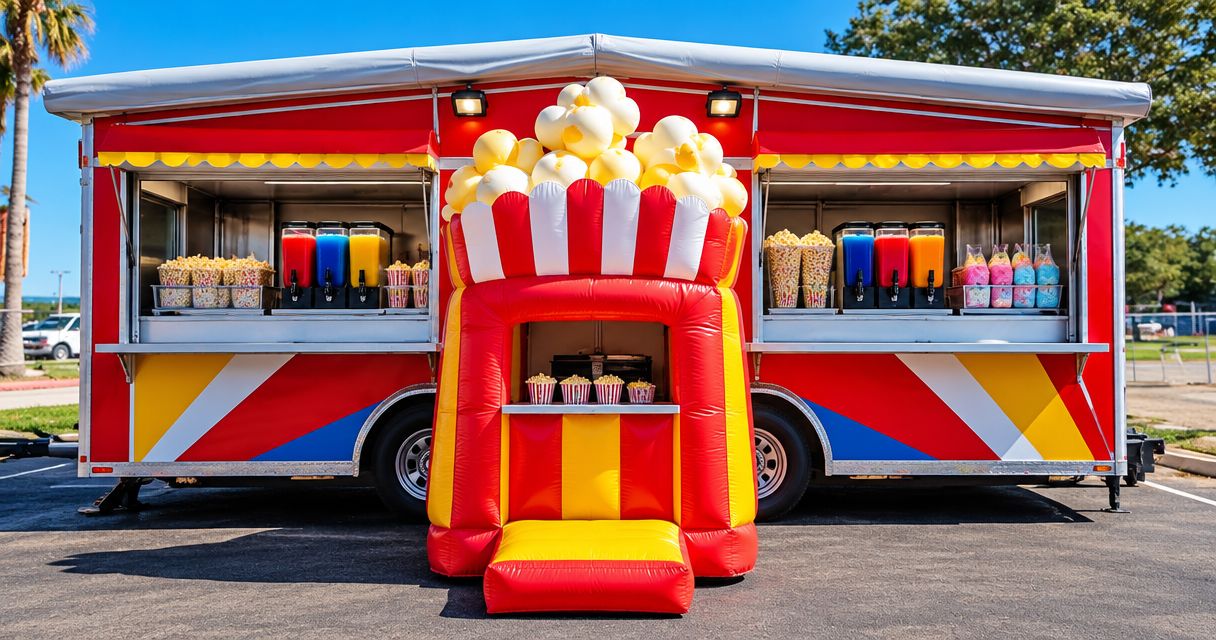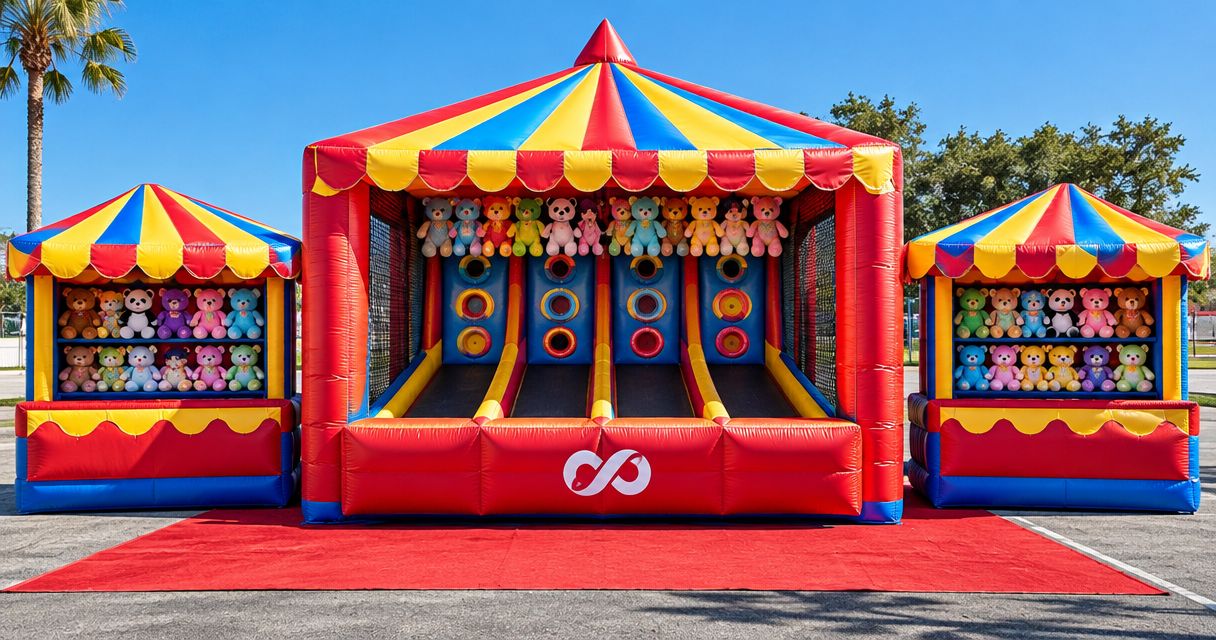
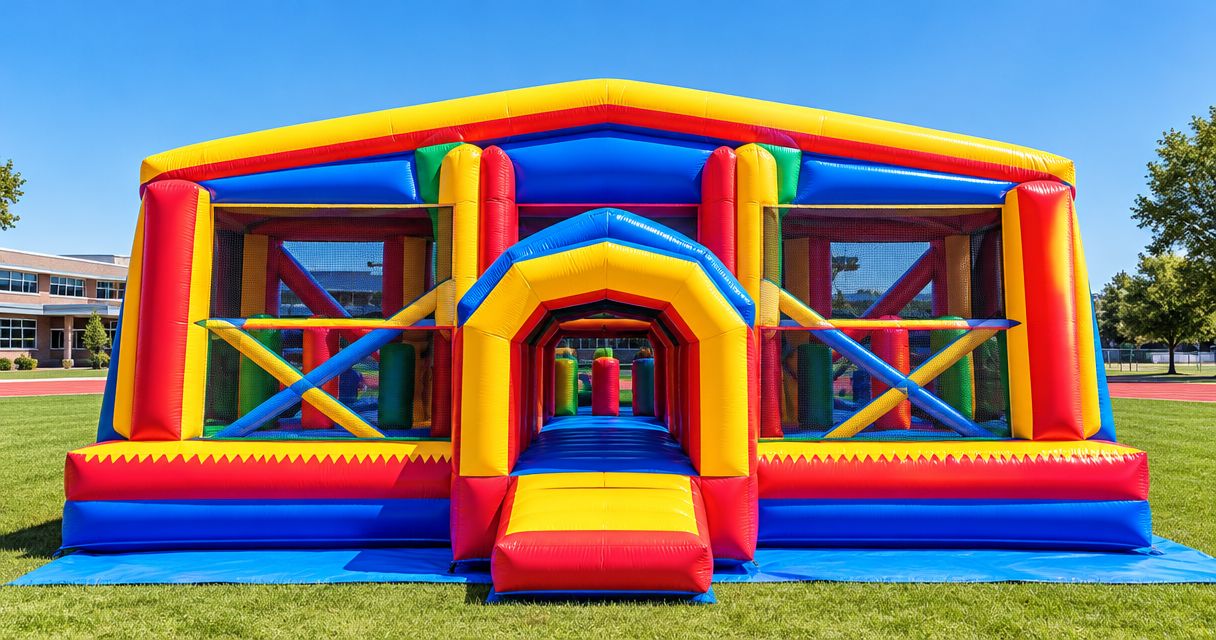
School obstacle course rentals are inflatable activity stations organized into class rotations with the aim of keeping field-day participation orderly and purposeful. This guide explains how to match equipment, campus space, supervision and transition time so your 2026 field day works for different ages without building the schedule around an unconfirmed rental.
- Choose obstacle course rentals around class movement, supervision and confirmed equipment rules—not appearance alone.
- Arizona Bounce Around is best for Phoenix planners seeking equipment selection and event-planning help in one rental inquiry.
- Confirm site access, power, setup requirements and weather procedures before finalizing school field-day rotations.
- Keep a separate participation option for students who cannot or do not want to use the inflatable.
Why obstacle course rentals matter for schools
A school field day has a different planning problem from a backyard birthday: whole classes arrive together, activities must fit the timetable, and students need clear handoffs between adults. An obstacle course belongs in that timetable only when its operating requirements fit your groups.
Choose the station that fits your rotation, not the rotation that fits the largest inflatable. A visually impressive course does not answer the practical questions: who can participate, where students wait, and how the next class enters.
Arizona Bounce Around offers party and carnival rental equipment from its Phoenix base. Its stated strengths include equipment selection, delivery and setup, and help choosing equipment for larger events; your inquiry should turn those services into a specific campus plan rather than assumed arrangements.
Plan school field-day rotations in six steps
Define your groups before choosing equipment
Start with a spreadsheet or paper roster. List each class, its grade level, expected attendance and any participation accommodations the school needs to arrange. Separate the number of students assigned to a station from the number permitted on the equipment at once.
Do not copy a birthday-party plan into a school schedule. A family party can let children return throughout the gathering; a class rotation needs a defined arrival, activity period and departure. Older and younger students also need arrangements that follow the selected equipment's rules.
For your 2026 field-day plan, decide whether the purpose is individual participation, a cooperative challenge or a competitive activity. Timing students adds another task for staff and can distract from entry and exit control.
- Record expected attendance by class rather than total enrollment alone.
- Note the age groups that will use the same station.
- Identify students who need an adapted or alternative activity.
- Choose participation, cooperation or competition as the station's purpose.
- Give each class a designated adult responsible for its movement.
Map the campus before requesting a course
Walk the proposed area with the school facilities contact. Make a simple sketch showing the activity footprint, waiting area, exit route, nearby buildings and delivery access. Photographs help explain gates, changes in surface and other obstacles that a map misses.
Measure the route into the site as carefully as the activity space. A large open field does not resolve a narrow access point, an unsuitable surface or a distant power source. Ask the rental company to confirm the selected equipment's complete setup requirements, including clearances and anchoring arrangements.
Keep waiting students out of the equipment exit and away from vehicle routes. For Phoenix campuses, include shade, drinking-water access and the school's heat procedures in the site discussion. Apply the same site checks in Scottsdale, Chandler and Mesa rather than assuming similar campuses have identical conditions.
- Create 1 site map showing entry, waiting, activity and exit areas.
- Measure gates and describe the full delivery route.
- Identify the surface and disclose irrigation or underground-service concerns.
- Mark potential power locations for the rental company's review.
- Keep emergency access and ordinary campus routes unobstructed.
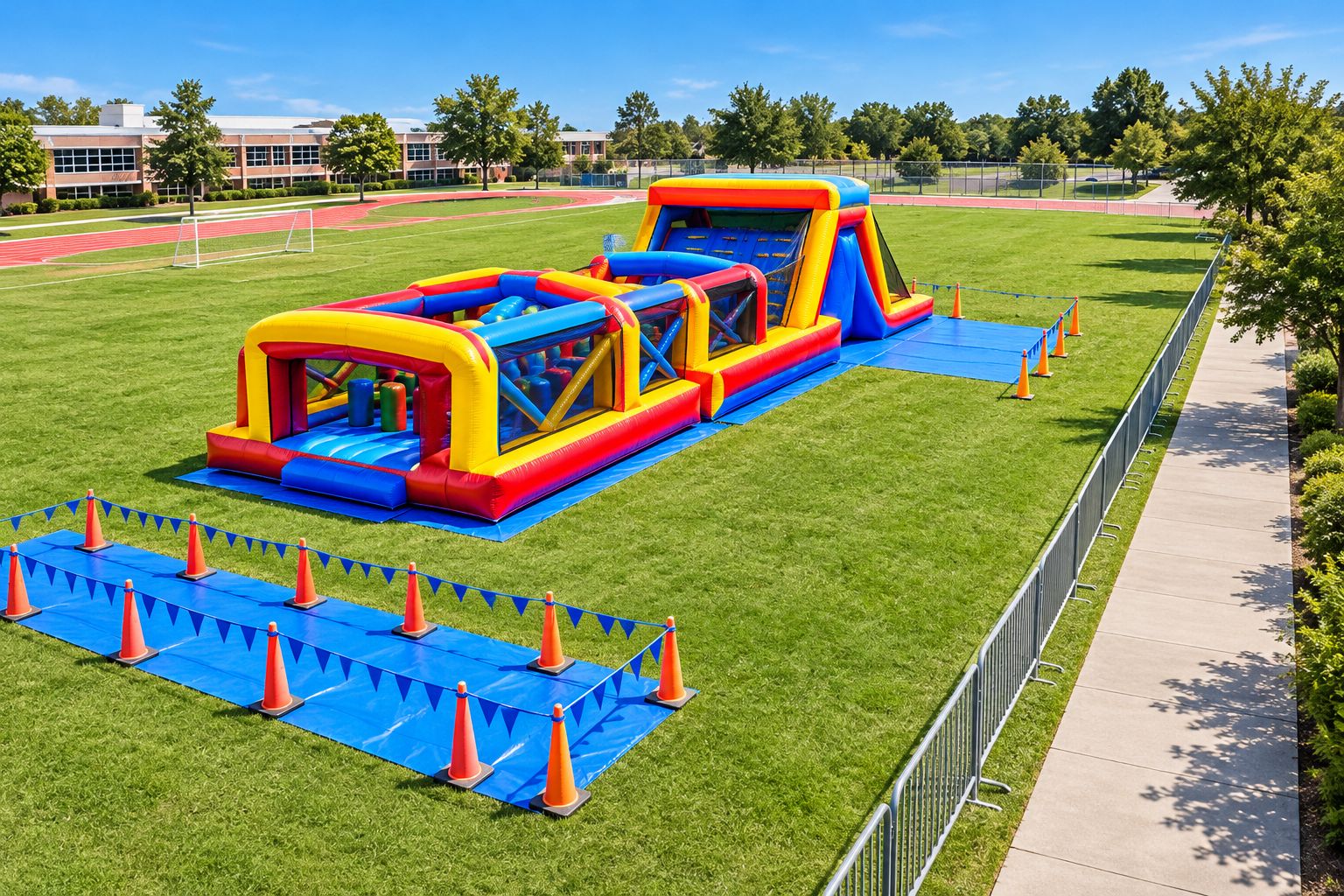
Match the rental to your participation plan
You can build the first shortlist yourself: compare the activities your students enjoy with the space and staff you have. Then ask Arizona Bounce Around about obstacle course rentals that fit those conditions, rather than requesting an unspecified large course.
The company's wider equipment selection gives you other categories to discuss, including bounce houses and carnival games. That is useful when the obstacle course is only part of the event, but additional equipment also creates more setup and supervision decisions. A wider selection is helpful only when each activity has a clear role.
Ask about clean equipment, delivery, setup and operating instructions as specific parts of the proposed arrangement. Confirm who supplies attendants and who supervises students; delivery and setup should not be treated as a promise of event-long staffing.
For a mixed celebration rather than a dedicated sports day, the guide to bounce house rentals for Chandler school celebrations provides another planning angle.
- Describe the grade levels and intended activity format.
- Request the selected unit's dimensions and participation restrictions.
- Ask how cleaning and equipment preparation are handled.
- Confirm delivery, setup, collection and staffing responsibilities separately.
- Compare the obstacle course with a simpler station before deciding.
Build rotations around actual participation
Draft the schedule using the school timetable, then review it against the selected equipment's operating rules. A station period must cover arrival, instructions, participation and departure—not just time inside the course.
Do not estimate capacity from a photograph or assume that parallel-looking sections permit simultaneous racing. Ask how participants enter, when the next participant can start, and how staff should manage an occupied exit. Use those answers to assess whether your class groups fit.
Keep 1 rotation sheet for each class, showing station order, transition cues and the adult leading the group. For 2026 scheduling, leave room for ordinary delays such as a class arriving late or needing instructions repeated; do not promise every student repeated turns before the operating plan supports that promise.
- Separate arrival instructions from active participation time.
- Confirm the permitted entry sequence with the rental company.
- Include time for the entire class to leave the station.
- Decide how staff will communicate a delayed rotation.
- Remove competitive timing if it interferes with orderly participation.
Assign supervision and an alternative activity
Write the adult roles before recruiting volunteers. Class management, equipment entry, exit monitoring and participation support are different responsibilities, even when the final staffing arrangement combines some tasks. Confirm the required arrangement with the rental company and school leadership.
An alternative activity should be part of the station plan, not something invented when a student declines. Offer a school-approved option that students can join without explaining a personal need in front of classmates. Do not assume a carnival game is accessible to everyone; review its physical and sensory demands too.
Keep 1 named school lead responsible for decisions and communication with the rental company. That person needs the relevant contacts and authority to pause the school's participation when conditions or instructions require it.
- Name the school lead and the rental-company contact.
- Assign responsibility for waiting students and class handoffs.
- Review equipment instructions with the adults assigned to the station.
- Prepare an alternative activity with an identified supervisor.
- Explain how staff will pause participation and report a concern.
Confirm the operating plan and quote
Turn the draft into a written brief. Include the campus address, event date, grade levels, class groups, site photographs, measured access route and requested equipment categories. This gives the rental company information to evaluate instead of a request based only on appearance.
For a Phoenix school, confirm the campus-specific delivery and setup arrangements. For larger events elsewhere in Arizona, request a location-specific delivery quote and confirmation of the proposed service arrangements. Do not assume a Phoenix plan transfers unchanged to a distant site.
Your 2026 confirmation should also address weather decisions, school approval requirements and what happens if the planned activity cannot proceed. Request the applicable terms directly rather than borrowing rules from another rental or a previous event.
- Send the site map and access photographs with the inquiry.
- Confirm the equipment selection and written setup requirements.
- Resolve school documentation and approval requirements.
- Record delivery access, setup timing and collection arrangements.
- Review weather procedures, cancellation terms and decision contacts.
Plan your school rental inquiry
Share your campus, date, grade levels and site details to discuss equipment and setup.
Compare field-day station options
Best for active class rotations: an obstacle course, when its confirmed rules fit the group. Other activities serve different purposes. Choose the station by what students will do and what adults must manage, not by how many categories you can add.
| Option | Best for | Practical advantage | Key limitation |
|---|---|---|---|
| Inflatable obstacle course | A directed physical challenge | Gives the station a defined activity to organize | Group flow depends on the selected course's entry and participation rules |
| Bounce house | A play-focused school celebration or family party | Suits an event centered on play rather than completing a route | Does not provide the same course-based activity |
| Carnival games | Skill-based stations at school or community events | Lets you organize activities around individual game tasks | Each game still needs suitable placement and queue management |
| School-led ground activities | Classes needing an alternative to inflatable participation | Lets staff adapt the activity using school-approved materials | Requires staff preparation and an appropriate activity plan |
The same comparison helps with backyard birthdays, family gatherings and corporate events, but the scheduling changes. A birthday can use a flexible activity period; a corporate or community event needs a plan for guests arriving throughout the event. A school rotation must account for the whole class arriving together.
Common mistakes schools make
Booking before checking access
An equipment choice is incomplete until the delivery route and setup area are reviewed. Send access measurements and photographs before treating the rental as settled, especially when gates, buildings or fenced play areas separate the vehicle access from the field.
Treating the class total as equipment capacity
A class roster tells you how many students reach the station, not how many can participate together. Keep those numbers separate in the schedule and follow the selected equipment's instructions. Do not solve a slow queue by increasing simultaneous participation beyond the stated rules.
Assigning every task to the class teacher
A teacher managing the waiting class cannot automatically cover every equipment-related role. Agree on staffing responsibilities explicitly. Include arrival instructions, student support, entry and exit management, and communication with the next station.
Making the alternative feel like exclusion
A student who skips the inflatable still needs a worthwhile field-day activity. Plan the alternative alongside the main station and explain both without presenting participation as a test of confidence or ability.
Leaving weather decisions until students arrive
Put the school's heat procedures and the rental company's weather instructions into the 2026 event brief. Identify who makes decisions and how teachers receive updates. A written communication plan is more useful than an assumption that someone will decide on the field.
FAQ
What's the best way to organize obstacle course rentals for a school field day?
Organize obstacle course rentals around class groups, confirmed equipment rules and adult responsibilities. Include arrival instructions, participation and departure in each rotation rather than scheduling only active play.
How many students can use a rental obstacle course at once?
The permitted number depends on the selected equipment and its operating instructions. Get that answer from the rental company before finalizing class rotations; total class attendance is not equipment capacity.
Is an obstacle course better than a bounce house for school rotations?
An obstacle course is the more direct fit when you want a course-based physical challenge; a bounce house fits a play-focused celebration. Compare the specific equipment's age rules, supervision needs and site requirements before choosing.
What should a Phoenix school send with a rental inquiry?
Send the campus address, event date, grade levels, class groups, site map and access photographs. Include power locations and school approval requirements so the discussion covers setup as well as equipment selection.
Does delivery and setup mean attendants stay for the event?
Do not assume delivery and setup include event-long attendants. Confirm rental-company staffing and school supervision responsibilities separately, then put the agreed arrangement in the event brief.
What should students do if they cannot use the inflatable?
Provide a school-approved alternative activity with a designated adult. Review participation needs in advance so students can take part without having to explain personal circumstances to classmates.
Can a school outside Phoenix request equipment for a larger event?
Arizona Bounce Around describes its service area as Arizona. For a larger event outside Phoenix, request a location-specific quote and confirmation of delivery, setup and other service arrangements before committing the school schedule.
One last thing
Finish the exit plan before adding another activity. Walk through the station as a class would: approach, wait, receive instructions, participate and leave. If the departing group crosses the arriving group, redraw the layout before requesting more equipment.
That small planning exercise gives your rental inquiry a concrete question: does the proposed course fit the way your school needs students to move?