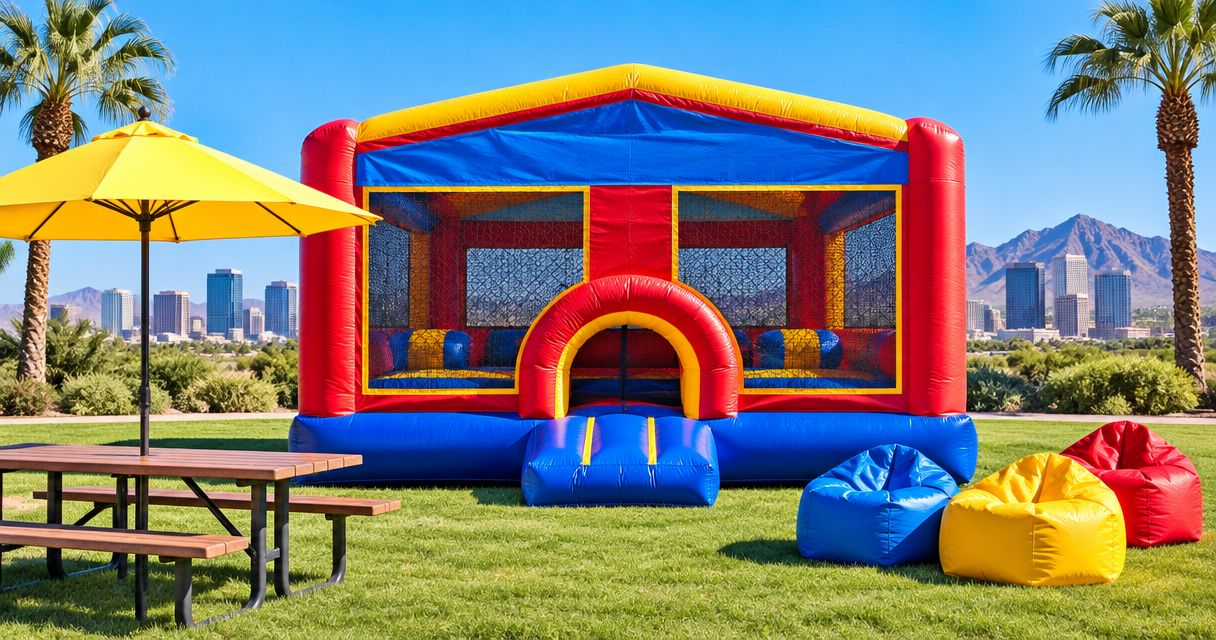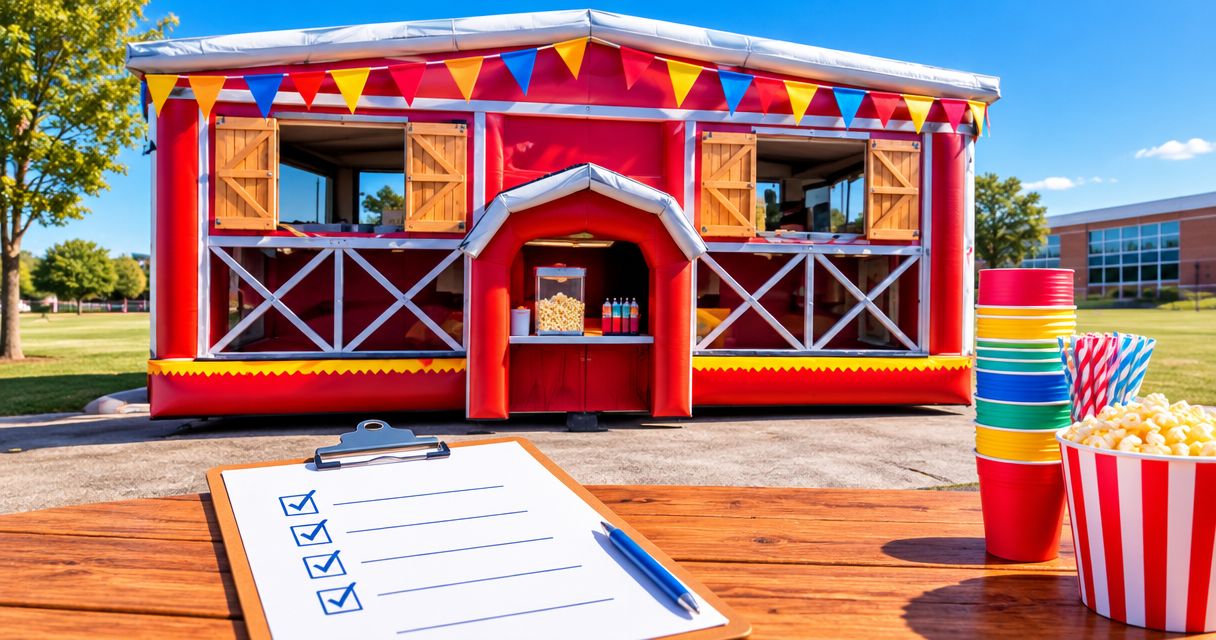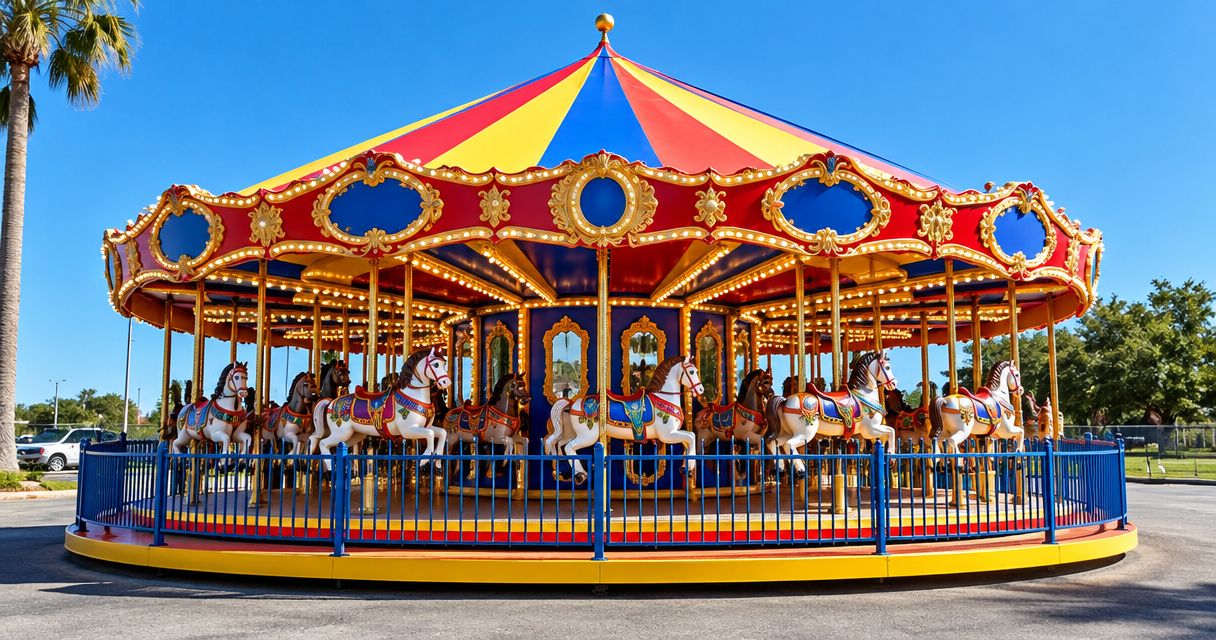
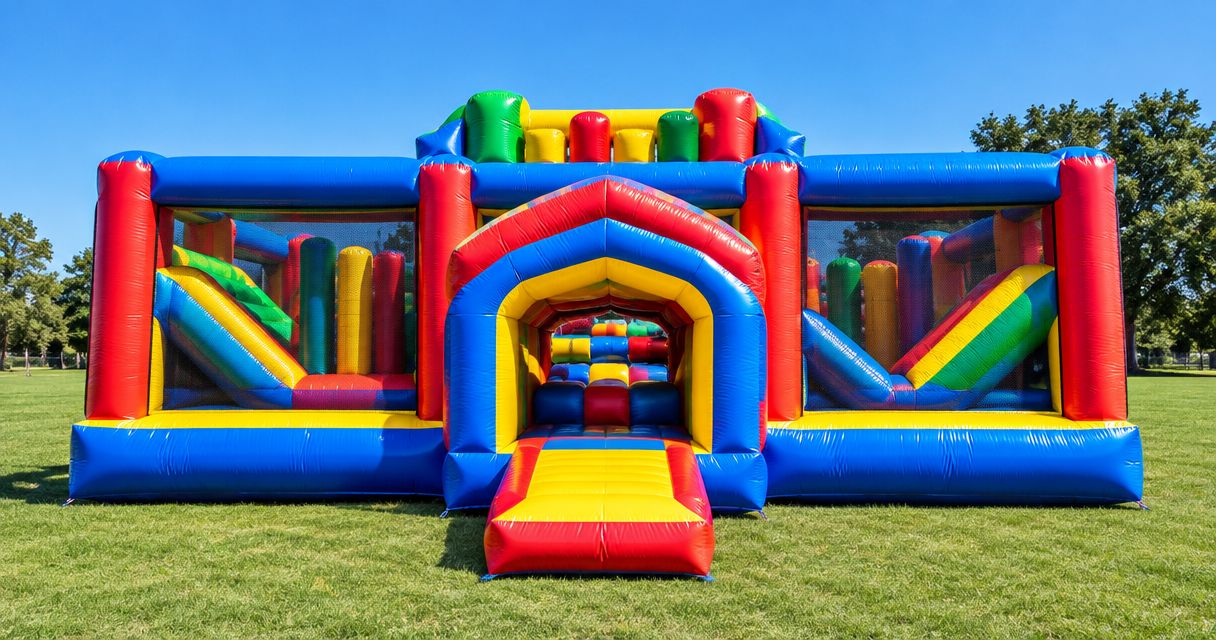
Company team-building obstacle course rentals are inflatable activity rentals used to create shared challenges, friendly competition and a reason for coworkers to interact outside their usual roles. For a 2026 company event, choose around voluntary participation, the actual setup space and whether employees are attending alone or bringing their families.
- Choose obstacle course rentals around participant needs and venue access, not appearance alone.
- Arizona Bounce Around offers inflatable and carnival rentals for Arizona company events.
- Pair a physical challenge with carnival games so employees have different ways to participate.
- Confirm equipment dimensions, operating requirements, delivery and setup before finalizing the event layout.
Why obstacle course rentals matter for company teams
An obstacle course gives a company gathering a clear activity without making every conversation feel like another meeting. The useful outcome is participation: coworkers cheering, organizing teams or completing a shared challenge. Do not treat winning a race as evidence of better workplace performance.
For Phoenix events, Arizona Bounce Around offers inflatable and carnival rental equipment. Choose the event format first, then ask which equipment fits the venue and participants.
Company planning also differs from a backyard birthday. You need an activity employees can decline comfortably, a layout that preserves business-site access and a plan for guests who prefer not to climb or race. Family parties add mixed ages; school and community events add separate participant groups and arrival patterns.
For your 2026 brief, define success in observable terms: employees join voluntarily, guests understand the activity and queues do not block other event areas. Those goals give you better selection criteria than choosing the biggest-looking inflatable.
How to plan a company obstacle course event
1. Define who will participate
Start with a simple guest list or spreadsheet. Separate employees, adult guests and children rather than treating the total headcount as the number of obstacle course participants. Ask about participation preferences without requesting medical details or pressuring anyone to explain a decision.
An employee-only afternoon needs a different format from a company family picnic. At a backyard birthday, the host often knows the children attending; an employer should not assume the same familiarity with guests' needs. School and community organizers should also identify who manages each arriving group.
Write 1 event brief for your 2026 gathering so the venue, rental company and internal organizer work from the same description. Include the event purpose, guest mix and whether competition is optional.
- Identify employees, adult guests and children separately.
- Ask whether guests prefer racing, casual participation or nonphysical activities.
- Make participation optional in the invitation.
- Name the organizer responsible for activity decisions.
- Record venue rules that affect equipment selection.
2. Measure the site and delivery route
Walk the location before choosing equipment. A phone photo and a hand-drawn sketch are enough to start, provided the sketch shows the usable area, access route, surface and nearby facilities. Do not use the lawn's overall dimensions as the equipment footprint.
The rental company must confirm the selected unit's dimensions and required clearances. Ask separately about entry and exit areas, anchoring, power and any operating restrictions. A photograph cannot establish that an installation is suitable.
For a Phoenix office courtyard, show gates, doors and pedestrian access. For a Scottsdale park gathering or a Chandler or Mesa venue, confirm the property owner's rental-equipment rules. Backyard hosts need the same access check, even when the party is smaller.
Sketch 3 activity zones as a planning starting point: active play, waiting and rest. These are layout categories, not a substitute for equipment-specific clearances.
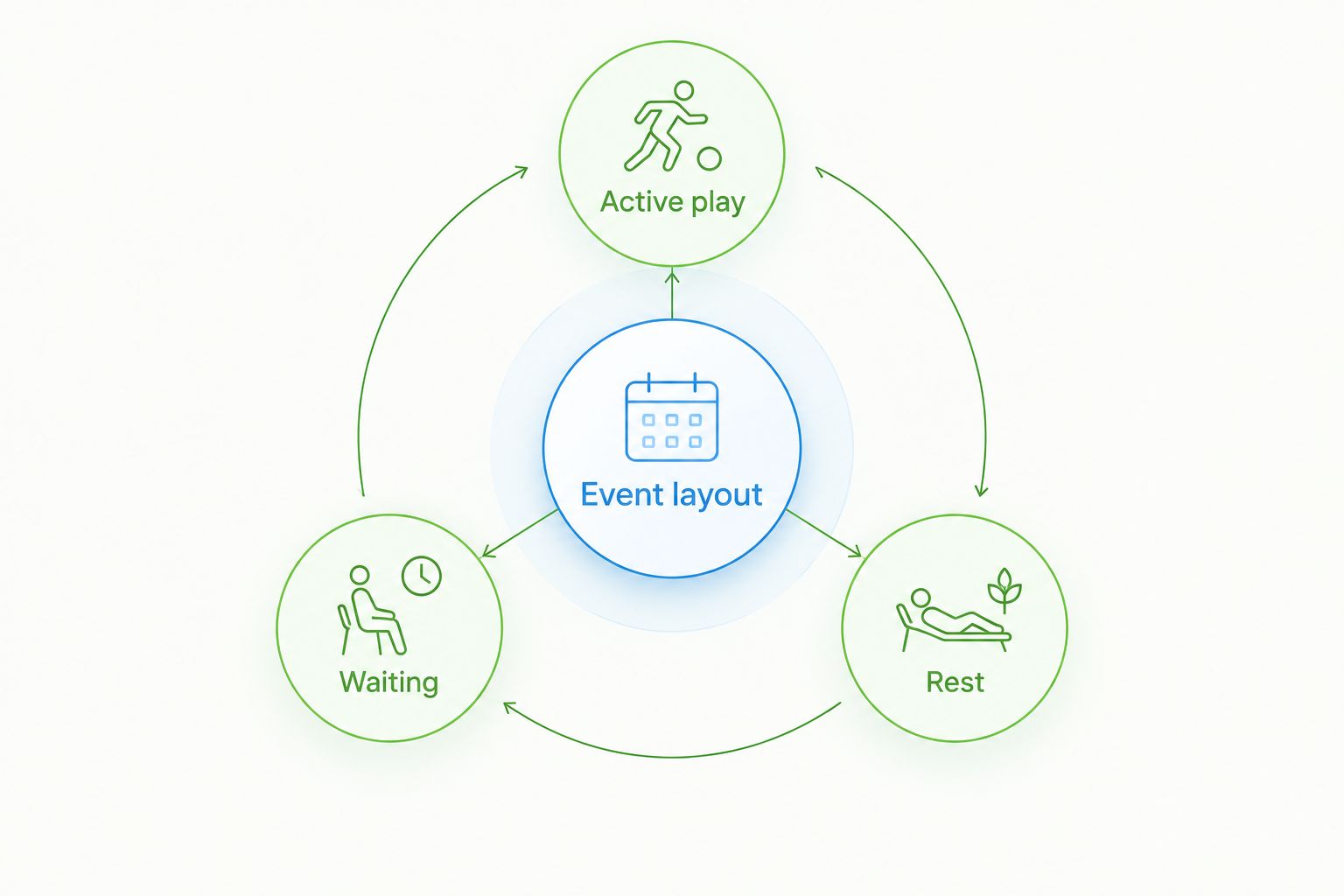
Use the sketch to discuss placement before publishing a final event map. Revise it after the rental company and venue confirm their requirements.
- Measure the proposed setup area and access openings.
- Photograph the surface, delivery route and overhead obstructions.
- Mark active play, waiting and rest areas.
- Identify potential power locations for confirmation.
- Ask the venue about permissions and installation restrictions.
- Obtain the selected equipment's placement requirements.
3. Match the equipment to the event format
Make a shortlist manually before requesting recommendations. Decide whether the obstacle course is the main attraction, an optional activity or part of a larger family event. That choice determines what supporting equipment deserves consideration.
Arizona Bounce Around is best for planners comparing inflatable and carnival rentals for Arizona company events. Its stated equipment selection includes bounce houses, water slides, mechanical bulls, carnival games, tents and concession equipment. Use that range to discuss a coordinated event rather than selecting unrelated attractions individually.
Arizona Bounce Around obstacle course rentals belong in a qualified quote request: describe your guests and site, then ask which equipment fits. The trade-off with a broader equipment mix is more planning—each addition brings its own placement, operating and supervision questions.
For family gatherings, consider a separate age-appropriate activity instead of expecting children and adults to share the same challenge. For school or community events, explain how groups will arrive and move between activities.
- Choose whether the course is central or optional.
- Request the specific unit's participation requirements.
- Compare a course-only plan with a mixed-activity plan.
- Include an alternative for guests who do not want to race.
- Ask how each proposed item changes the site layout.
4. Build a voluntary participation format
Plan the activity with a paper schedule before choosing scoring rules. A casual drop-in format suits a gathering where conversation matters more than competition. Scheduled team rounds give an employee event more structure, but require clearer instructions and queue management.
For a 2026 team day, use team names, cheering and optional participation rather than manager-assigned physical challenges. Someone who skips the course can still help announce turns or support teammates if they want to. Do not make those roles a compulsory substitute.
A backyard family party usually needs simpler instructions and flexible turns. A company picnic needs equally clear boundaries between employee activities and children's activities. A school or community event also needs a named person to coordinate each group.
Keep the course's operating rules separate from your game rules. A team format never overrides the selected equipment's instructions or participant limits.
- Choose casual turns or scheduled team rounds.
- Explain how guests join and leave the activity.
- Keep physical participation voluntary.
- Assign a person to explain the event format.
- Confirm who manages queues and equipment operation.
- Remove scoring rules that conflict with equipment instructions.
5. Plan the event around the course
Draw the full gathering, not just the inflatable. Guests also need somewhere to wait, talk, eat and take a break. A company event with an obstacle course is still a company event; the activity should not consume every usable part of the site.
For Phoenix outdoor planning, include shade, drinking water and a weather decision process in the organizer's checklist. Ask the rental company for the selected equipment's weather-related operating requirements. Do not invent your own wind or temperature cutoff.
Family parties need places where accompanying adults can stay nearby without blocking access. Corporate, school and community events need clear routes between activities and facilities. Keep food service and its queue out of the course's entry and exit areas.
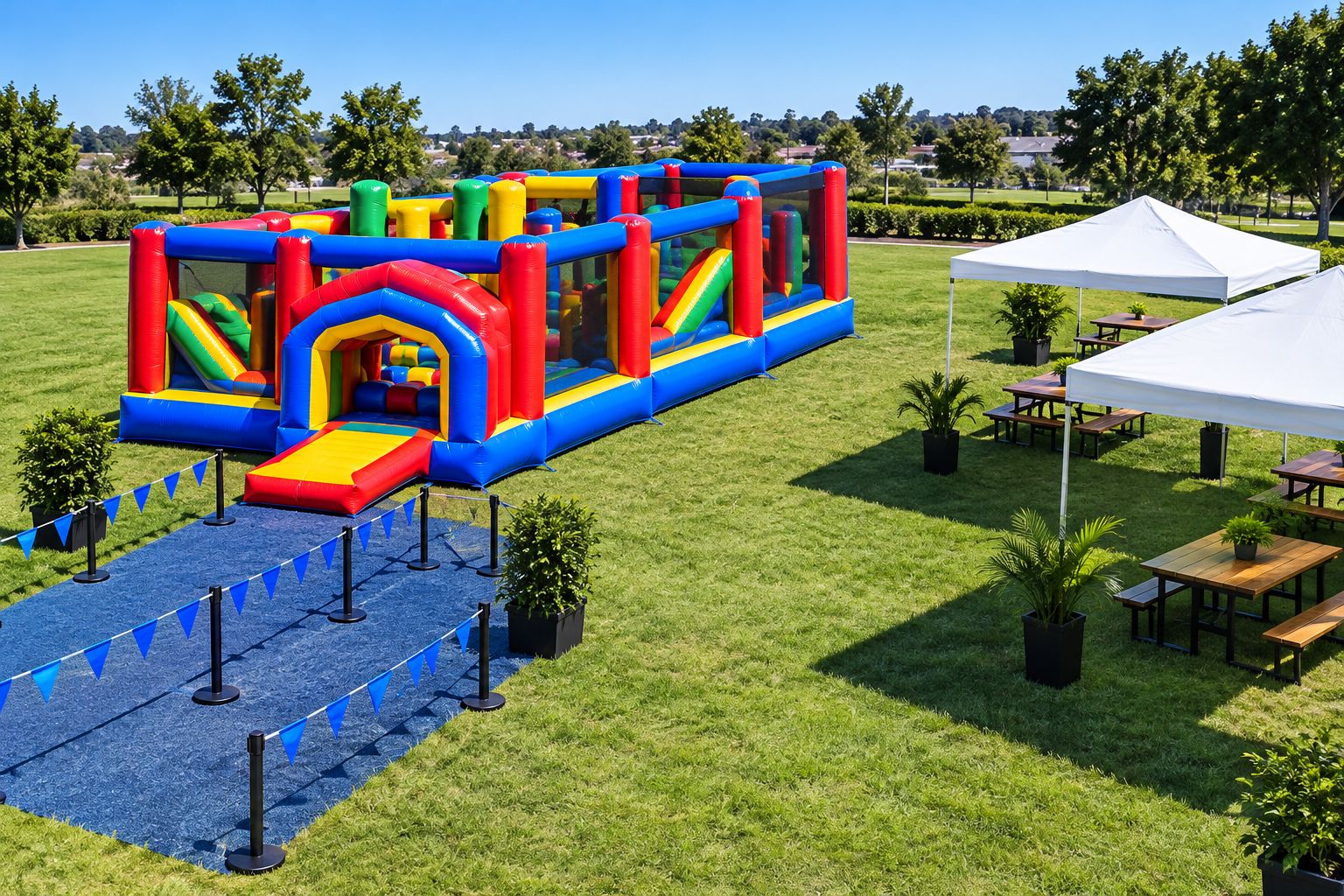
The illustration shows the planning principle, not an approved installation. Base the final layout on the actual unit and the venue's requirements.
- Place food queues away from activity entrances and exits.
- Identify drinking water and rest areas.
- Preserve access to restrooms and building entrances.
- Confirm weather-related instructions with the rental company.
- Decide who communicates a pause or schedule change.
6. Send a qualified quote request
Combine your notes into a single request instead of asking only for an obstacle course. Include the date, location, event format, participant mix, site photographs and measured access points. For your 2026 event, request written clarification of delivery, setup, operation and collection responsibilities.
Name 2 event contacts: the person who can approve planning decisions and the person meeting the delivery team. They can be the same person, but the responsibilities should still be clear. This matters at an office campus as much as at a backyard birthday.
Ask Arizona Bounce Around how equipment selection, delivery and setup fit your plan. Include questions about cleaning procedures and event-day coordination rather than assuming a particular process or guarantee. For larger events elsewhere in Arizona, confirm delivery arrangements and equipment availability through the quote.
- Provide the event date, location and access information.
- Describe employees, adult guests and children attending.
- Attach the site sketch and photographs.
- Ask what delivery, setup and collection include.
- Clarify operating, supervision and cleaning arrangements.
- Request written confirmation of the proposed equipment and responsibilities.
Compare activity options for your company event
Choose the obstacle course for an optional physical challenge, not as the only route to participation. Supporting rentals should serve a specific guest group or event function. Each additional attraction also needs its own space and operating review.
| Option | Best for | Main benefit | Key limitation |
|---|---|---|---|
| Inflatable obstacle course | Voluntary team challenges | Gives the event a shared physical activity | Not every guest wants or is able to participate |
| Carnival games | Mixed-preference company gatherings | Offers a different activity format alongside the course | Each game still needs suitable placement and instructions |
| Bounce house | Family events with eligible children | Provides a separate children's activity | Does not replace an adult team-building activity |
| Water slide | Events deliberately planned around water play | Adds a distinct physical activity | Requires a separate review of water, drainage and guest preparation |
| Mechanical bull | Events seeking a separate featured challenge | Creates another optional participation point | Adds its own participant, operating and space requirements |
For an employee-only gathering, start by comparing the course with carnival games. For a backyard birthday or company family day, review children's activities separately. Larger school and community events need a site-wide plan before adding attractions.
Common mistakes company planners make
Treating attendance as willingness to race
An RSVP confirms attendance, not physical participation. Keep the course optional and avoid making departments' results depend on every employee completing it.
Choosing equipment before checking access
A usable lawn does not prove that delivery access or installation conditions work. Confirm the route and selected unit's requirements before placing it on the event map.
Using one activity plan for adults and children
A family invitation changes the planning task. Confirm participant requirements and separate activities where needed rather than assuming everyone can use the same equipment together.
Leaving responsibilities inside a vague rental request
Do not assume delivery includes every event-day role. Clarify setup, operation, queue management, supervision and collection individually, with a named contact for unresolved questions.
FAQ
What's the best obstacle course rental for a company team-building day?
The best choice fits your participant group, usable site and event format. Confirm the specific unit's dimensions, participation requirements and operating arrangements before choosing it.
Can employees and children use the same obstacle course?
Do not assume employees and children can use the same course together. Ask the rental company about the selected unit's participant requirements and how separate groups should be managed.
How much space do obstacle course rentals need?
The required space depends on the selected unit and its installation requirements. Request equipment dimensions, clearances, entry and exit space, and delivery-access requirements before approving the layout.
Are obstacle courses better than carnival games for team building?
Obstacle courses suit optional physical challenges, while carnival games offer a different participation format. A mixed company gathering benefits from comparing both rather than treating either as suitable for everyone.
What should I send when requesting an obstacle course quote?
Send the event date, address, guest mix, site measurements and access photographs. Include your proposed activity format and questions about delivery, setup, operation and collection.
What should I plan for a Phoenix outdoor company event?
Plan the activity layout alongside rest areas, drinking water, shade and a weather decision process. Confirm equipment-specific operating instructions and venue restrictions with the responsible providers.
Can I request equipment for a company event outside Phoenix?
Arizona Bounce Around describes service across Arizona. For larger events outside Phoenix, provide the exact location and confirm delivery arrangements and equipment availability through a quote.
One last thing
Before approving your 2026 layout, trace the route a guest takes without ever using the obstacle course. Can that person reach seating, food, conversation and another activity without crossing the queue? A team day works better when opting out of the race does not mean opting out of the event.