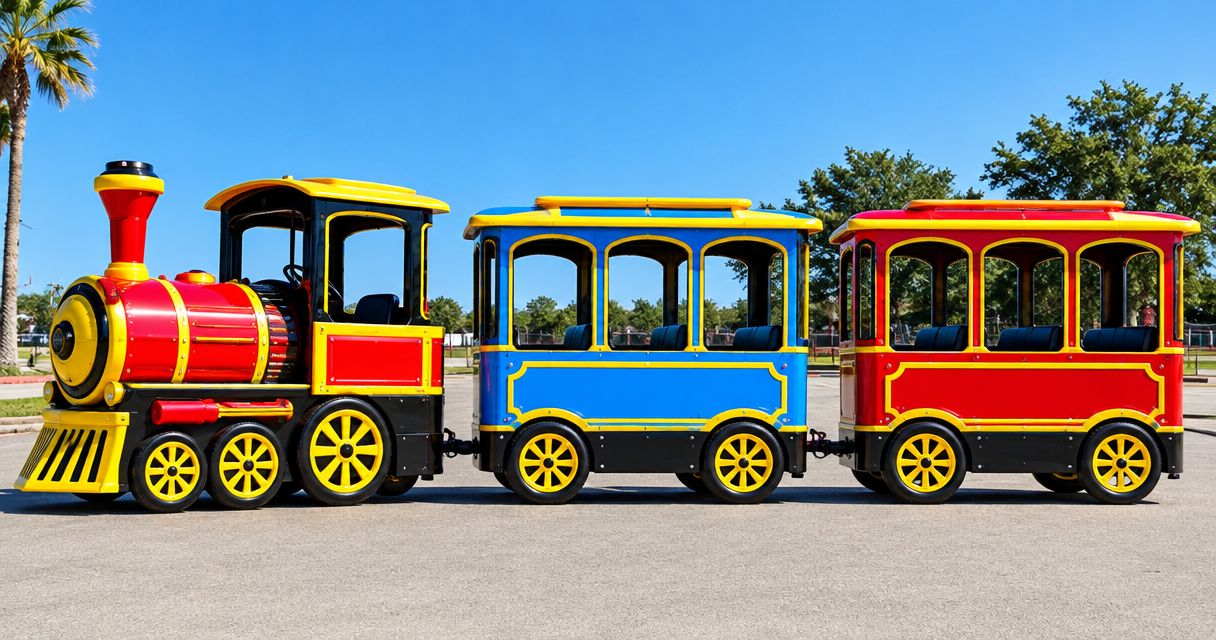
Plan your trackless train rental by getting the proposed route reviewed before assigning space for boarding, waiting guests and nearby activities. Keep the queue outside the train’s travel path, preserve pedestrian and emergency access, and have the rental provider confirm the equipment’s requirements before you finalize the layout.
- Plan a trackless train rental around a provider-reviewed route, separate boarding area and clear pedestrian access.
- Choose the route for the site, not a promised ride length or assumed turning space.
- Arizona Bounce Around suits Phoenix parents and event planners seeking party and carnival equipment rentals.
- Send a marked site map, access photos and event schedule when requesting a qualified quote.
How do you plan a trackless train rental route and boarding area?
Use this planning order for your 2026 event. Confirm the route before placing the queue or surrounding attractions. A boarding station is only useful if the train can approach, stop and depart under the provider’s operating requirements.
- Confirm access. Show the provider how equipment reaches the proposed operating area.
- Review the route. Identify surfaces, slopes, turns, narrow points and pedestrian crossings.
- Place boarding. Choose a stopping location with room for the provider’s boarding procedure.
- Separate waiting. Put the queue outside the travel path and away from exits.
- Check conflicts. Compare the train plan with deliveries, food service and other activities.
For neighborhood-specific planning, see the guide to trackless train rentals for neighborhood and community events.
Why this matters
A route drawn through open space can still conflict with how guests use that space. Parents follow children, guests leave food lines, and volunteers move supplies between activities. Your layout needs to account for those movements, not just the train’s proposed path.
For a backyard birthday, this means protecting access between the house, refreshments and party seating. For a school, company picnic or community event, it means coordinating the route with the wider event map. An empty route before opening is not the same as a workable route during the party.
Choose a route that fits the site
Start with a possible route, not a fixed promise to guests. Ask the provider which layouts the specific equipment can operate on, then compare those requirements with the venue’s rules and physical conditions.
The following layouts are planning options, not confirmation that a particular train can use them.
| Route layout | Best for | Planning advantage | Main limitation |
|---|---|---|---|
| Continuous loop | Sites with a connected path around an activity area | Returns to the same boarding station without retracing the route | Every turn, crossing and narrow section needs review |
| Out-and-back route | Sites with a usable corridor and suitable turnaround areas | Follows a clearly defined path | Requires confirmed turnaround arrangements and a plan for shared space |
| Short circuit near boarding | Parties keeping activities close together | Keeps the ride near the main gathering area | Concentrates waiting guests and activity around the station |
Choose the simplest route the provider approves for your site. A longer route adds more locations to check; it does not automatically create a better party experience.
For a Phoenix backyard birthday, begin by checking whether the property has a suitable operating area at all. Do not assume a driveway, neighborhood street or shared path is included simply because it is nearby. Get property-owner or venue permission for every part of the proposed route.
For a school or corporate event, mark the route on the same plan used for tents, concessions and activity stations. Separate drawings make conflicts harder to spot.
Walk the full route before requesting approval
Photograph the route from the direction of travel, including the approach to boarding. Show gates open, describe changes in surface and identify anything that will move into the area during setup.
- Mark turns, corners and turnaround locations.
- Show slopes, uneven areas, curbs and surface transitions.
- Identify low branches, overhead structures and fixed obstacles.
- Note vehicle entrances, pedestrian crossings and emergency access.
- Identify irrigation, drainage or other conditions affecting the proposed path.
- Flag areas shared with guests, vendors or venue staff.
Ask the provider what measurements are needed. Do not substitute a generic clearance figure for requirements tied to the actual equipment.
Build the boarding area around the stopping location
Place boarding where guests can understand where to wait without standing in the route. Ask the provider which side guests use, how boarding and unloading work, and what space must remain clear around the stopped train.
Think of the station as separate functions: the approach, the boarding position, the waiting queue and the exit back into the event. Keep those functions distinct on your drawing even if the event is small.
Keep waiting guests out of the travel path
Start the queue beside the boarding area rather than across the train’s approach. Ask the provider and venue how to mark boundaries without obstructing the operating area or creating another obstacle.
At a birthday party, tell accompanying adults where to wait and where to meet children afterward. At a larger event, include queue management in the staffing plan rather than assuming the train operator will also organize the crowd.
Give departing guests somewhere clear to go
An unloading point that leads directly into the waiting line creates conflicting movement. Show a clear return toward the party, refreshments or seating, and ask the provider to review that arrangement.
Keep strollers, bags and temporary seating outside the required operating space. If families need a nearby waiting spot, identify it on the plan instead of letting it develop at the boarding entrance.
Plan for comfort without crowding the station
For a 2026 Phoenix event, consider where guests will wait in sun or shade at the actual event time. Any proposed shade structure needs its own placement review so its legs, supports and access do not interfere with the route.
Ask how guests with mobility needs can participate and where accompanying adults should stand. Confirm the actual equipment’s access arrangements rather than describing the ride as accessible without supporting information.
Why route and boarding requirements vary
The correct layout depends on the equipment and the site. These are the factors to resolve with the provider and venue before treating your sketch as a final plan:
- Equipment requirements: Confirm turning, stopping, boarding and operating-space requirements for the specific train.
- Ground conditions: Identify the proposed surface, slopes and transitions for provider review.
- Access restrictions: Check gates, delivery approaches and venue areas that are not part of the rental space.
- Guest movement: Account for food lines, toilets, entrances and movement between activities.
- Event schedule: Show when setup, deliveries, guest arrival and breakdown use the same space.
- Operating conditions: Ask about weather-related restrictions, site review and who decides whether operation proceeds.
Avoid designing around an assumed passenger capacity or ride cycle. Ask for those details first, then decide whether the proposed attraction fits your attendance and schedule.
Match the layout to your event
Backyard birthdays and family parties
For a Phoenix family party, check the usable property area before planning decorations around a train station. Keep the house entrance, refreshments and a place for accompanying adults connected without sending guests through the route.
The same site-first approach applies in Scottsdale, Chandler and Mesa. A shared neighborhood space needs permission and a coordinated plan; a private backyard invitation does not establish permission to use a sidewalk or street.
If the site cannot support a provider-approved route, change the activity plan. Do not squeeze the boarding area into space needed for operation.
Schools, corporate events and community gatherings
For a school celebration, keep arrival and dismissal arrangements visible on the event map. Identify who will coordinate the queue and how that person will communicate with the operator.
For a corporate picnic or community gathering, check the route against vendor access, catering deliveries and other activities. Share a revised layout whenever an attraction or food station moves.
For larger Arizona events outside the Phoenix area, request confirmation of service arrangements, delivery and availability by quote. A statewide event plan still needs a site-specific route review.
Prepare a clear route-review packet
A useful 2026 quote request gives the provider enough information to identify questions before event day. Send a marked map and photographs together; neither replaces the other.
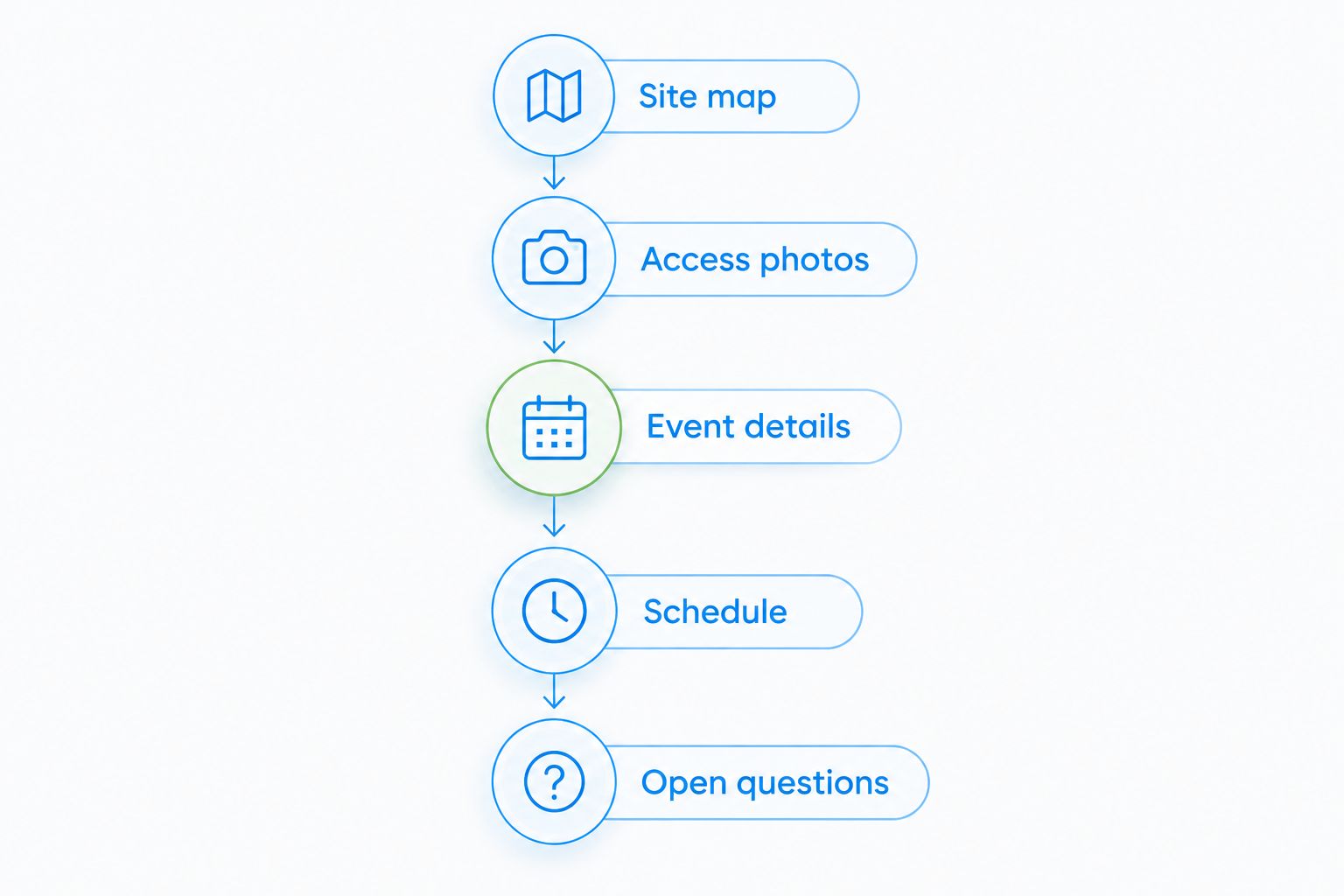
Use these headings to organize the packet:
- Site map: Mark the proposed route, boarding position, queue, exits and other activities.
- Access photos: Show the delivery approach, gates, turns and surface changes.
- Event details: Include the address, event date, guest profile and expected attendance.
- Schedule: Identify setup access, guest hours, shared deliveries and breakdown restrictions.
- Open questions: List unresolved operating, staffing, accessibility and weather questions.
Before booking, ask which details remain provisional and what must be confirmed at the site. Keep the latest plan with the person coordinating setup, not just in the original booking email.
Arizona Bounce Around is best for Phoenix parents and planners seeking party and carnival equipment rentals. Its listed selection includes bounce houses, water slides, mechanical bulls, carnival games, tents and concession equipment; ask about train arrangements directly rather than treating a general equipment inquiry as confirmation.
That selection is useful when coordinating several party activities, but it does not establish that a particular route or train request is suitable. Ask Arizona Bounce Around to address delivery, setup, equipment selection and event-planning needs in the quote, with responsibilities clearly stated.
Can the train route cross a walkway?
Treat a walkway crossing as an unresolved layout issue until the provider and venue review it. Show where pedestrians travel, who will manage any approved crossing, and whether the route can avoid that conflict instead.
Do not place the boarding queue across the walkway while solving the crossing question. Keep both movements visible on the same drawing.
How much room should you leave for boarding?
Use the specific train’s confirmed boarding and operating requirements, not a universal space allowance. Ask for the stopping area, approach, departure path and waiting-space requirements as separate items.
For your 2026 layout, also identify where guests go after unloading. A boarding footprint alone does not describe the full station.
Who should manage the waiting line?
Assign queue responsibility explicitly in the event plan and confirm the division of duties with the provider. Do not assume an operator, parent or volunteer will take on that role without agreement.
Give the designated person the boarding rules and a way to communicate with the operator. For school and community events, include that role in the staff briefing.
FAQ
What should I plan first for a trackless train rental?
Plan the proposed route first, then have the provider review it before placing boarding and waiting areas. Include surfaces, turns, access points and pedestrian conflicts.
Can I put a trackless train boarding area in my driveway?
Use a driveway only after the provider reviews the site and the property owner approves its use. Show its surface, slope, access and connection to the proposed route.
Does a trackless train need a circular route?
Do not assume a circular route is required or suitable. Ask the provider to review the proposed layout and confirm the equipment’s turning and operating requirements.
Where should parents wait while children ride?
Place accompanying adults in a designated area outside the train’s operating space. Confirm where children unload and how families reunite without blocking boarding.
Can a trackless train share space with food lines?
Keep food queues outside the proposed train route and boarding area. Show both on the event map so the provider and venue can review any nearby movement.
What should I send with a trackless train quote request?
Send the event address, date, schedule, expected attendance, marked site map and access photographs. Include questions about operating requirements, staffing and weather-related restrictions.
Can Arizona Bounce Around help with other party equipment?
Arizona Bounce Around offers party and carnival rentals including bounce houses, water slides, mechanical bulls, carnival games, tents and concession equipment. Request event-specific equipment and delivery details in your quote.
One last thing
Recheck the route after the rest of the event is set up. A table, catering vehicle or relocated queue can change the layout you originally submitted.
For the final 2026 event briefing, compare the actual site with the reviewed plan. Resolve changes with the provider and venue before directing guests to boarding.