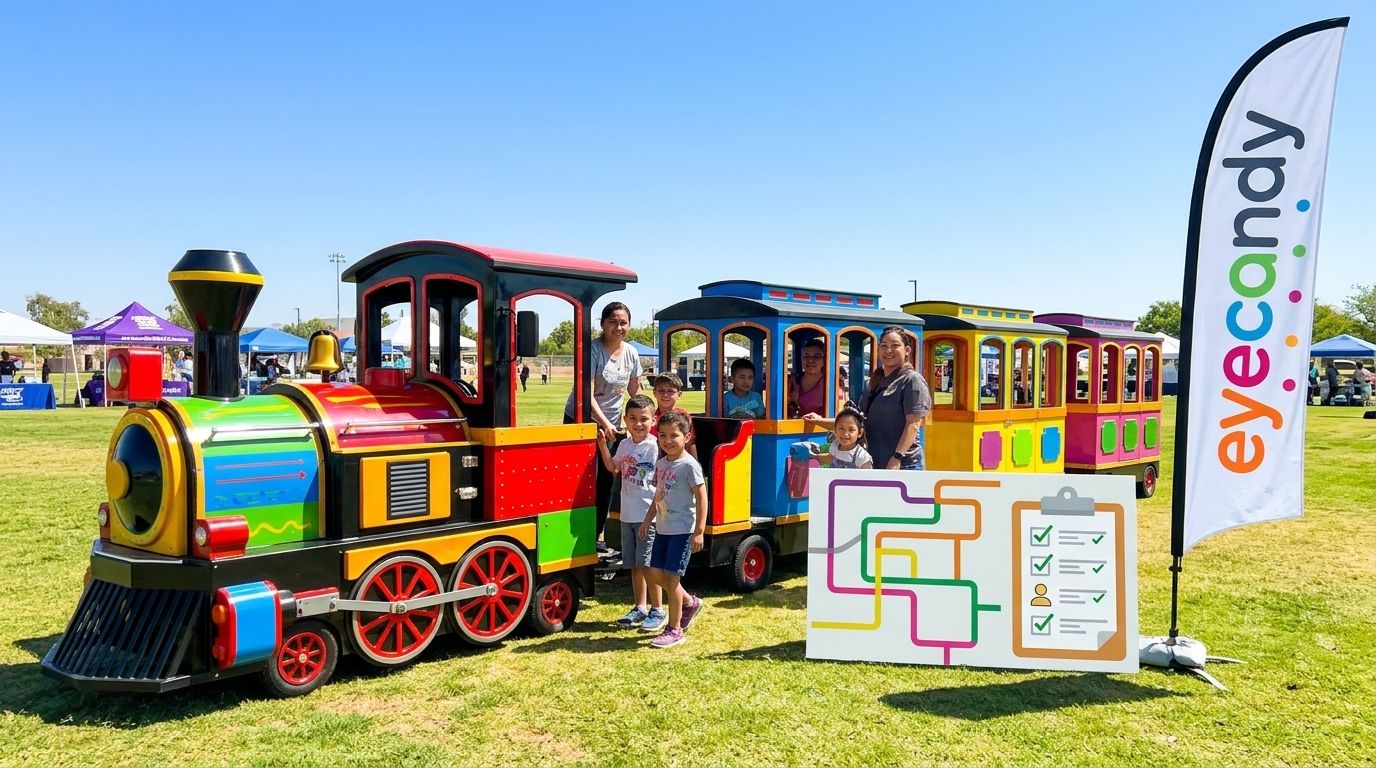
Community-event trackless train rental is the hiring of a wheeled passenger train for a planned route, with the aim of giving families a shared ride attraction. Unlike a stationary activity, it needs an agreed travel path, a boarding area and a plan for pedestrians, strollers and waiting guests; this guide covers those decisions for your 2026 event.
- Choose a trackless train rental only after the provider reviews your route, surface and boarding location.
- Arizona Bounce Around suits organizers comparing several party-rental categories for one community event.
- Keep the boarding queue outside the travel path, and confirm rider restrictions before advertising the attraction.
- For Phoenix neighborhood events, plan shade, pedestrian crossings and emergency access alongside the ride.
Why trackless train rental matters for community events
A trackless train is a moving attraction, so your route is part of the equipment decision. A courtyard that works for carnival games does not automatically work for a train. Turns, surface changes and pedestrian crossings need review before you commit to a layout.
Phoenix neighborhood organizers also need to connect the ride with the rest of the gathering. A backyard birthday needs room for family seating; a school fair needs clear pickup and entry points; a company picnic needs a route that does not split food service from the activity area.
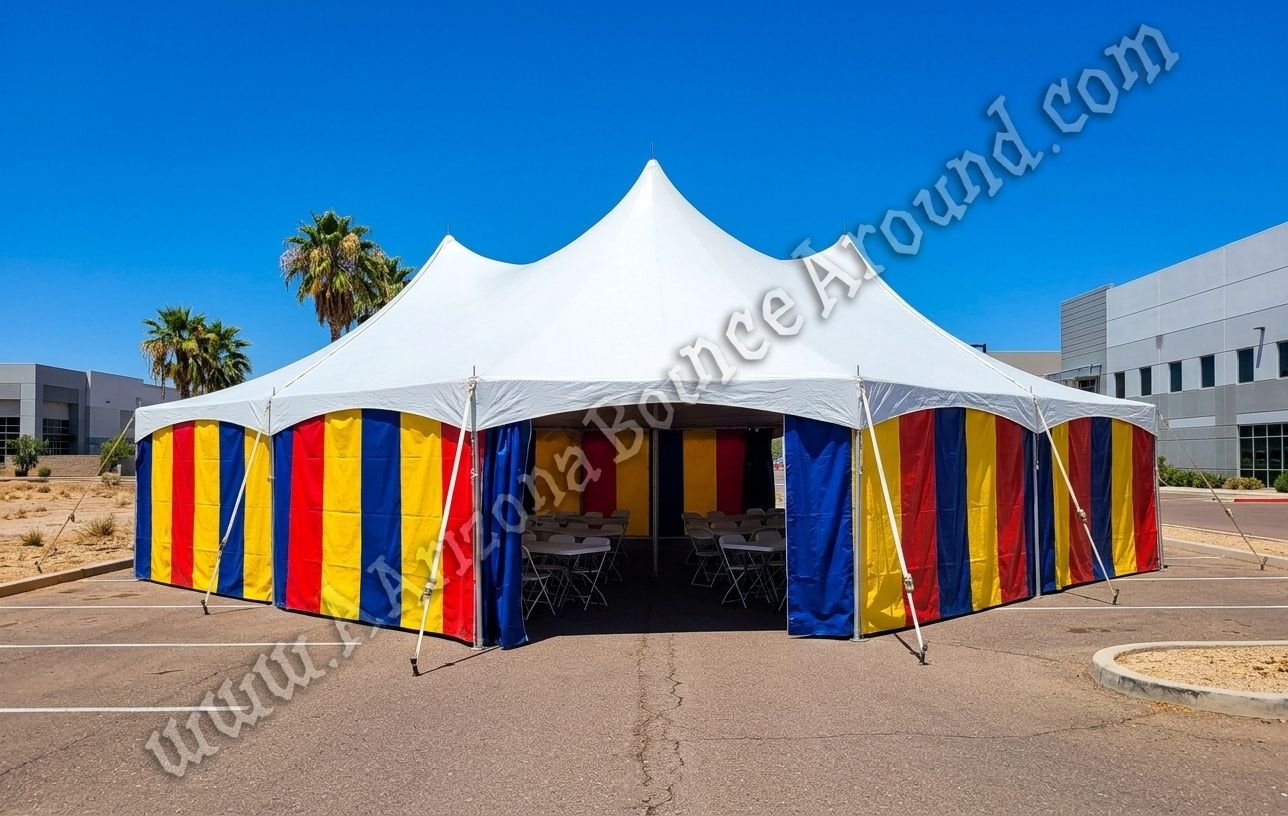
Arizona Bounce Around suits organizers comparing several party-rental categories for one community event. Its selection includes inflatables, carnival games, tents and concession equipment. Start with Arizona Bounce Around when coordinating those categories, and request train-specific details rather than assuming a particular model, capacity or route requirement.
Plan your route and boarding area
1. Define the ride's job before choosing a route
Decide whether the train is an attraction or transportation. Those are different assignments. A short ride returning to its starting point does not require the same guest instructions as a service carrying people between event areas.
For a backyard birthday or family reunion, consider a contained ride that returns children to the same meeting point. For a school, corporate or neighborhood event, identify where families enter, where they gather and whether the proposed route crosses those movements.
Write a brief before requesting equipment. Include the event date, location, expected attendance and intended purpose, without treating total attendance as the number of riders the train can accommodate.
- State whether the ride returns to its boarding point.
- Describe the age groups you expect to attend.
- Identify the adult responsible for event decisions.
- Mark activities that must remain outside the route.
- List any transportation or accessibility needs separately.
2. Walk and document the proposed travel path
Start with a printed site plan or a simple hand-drawn map. Walk the entire proposed route, including the approach to boarding and the space needed to leave it. Do not judge suitability from an overhead image alone.
For your 2026 planning file, prepare 1 route map showing the complete loop, boarding location and nearby event activities. Label uncertain areas for provider review instead of guessing whether a turn, slope or surface is acceptable.
Take at least 3 site photos as a planning minimum: the entrance, the tightest-looking turn and the proposed boarding area. These photos support a discussion; they do not replace the provider's assessment or establish that a route is suitable.
- Mark curbs, drains, bollards and surface changes.
- Show gates, narrow passages and overhead obstructions.
- Identify slopes and areas where water collects.
- Photograph the delivery approach as well as the ride path.
- Ask the provider to confirm the required operating space.
3. Match the equipment to the reviewed site
Send the map and photographs with your rental inquiry. Ask for the proposed train's requirements, not a generic assurance that a train fits. Different equipment has different operating instructions, and the route must match the equipment actually quoted.
Arizona Bounce Around offers several party-equipment categories and help choosing equipment for events. Use that planning conversation to compare the train concept with stationary activities if your location has unresolved route conflicts. The benefit is coordinating choices together; the limitation is that a broad rental selection does not establish which train configuration suits your site.
For a larger Arizona event outside the Phoenix area, include the exact address and event schedule in the inquiry. Confirm delivery arrangements and equipment availability through the quote before announcing the attraction.
- Request the specific equipment description in writing.
- Ask for surface, slope and turning requirements.
- Confirm boarding arrangements and rider restrictions.
- Ask who operates the train and manages the queue.
- Clarify delivery, setup and collection responsibilities.
4. Separate boarding from through-traffic
Choose a boarding location where waiting guests do not stand in the travel path. Place the queue so visitors can still reach food, restrooms and other activities without cutting through it. Keep the exit arrangement clear as well.
At a family party, position the waiting area where supervising adults can understand where children join and leave the ride. At a school or community event, check that the queue does not block registration, dismissal or the main entrance.
Your 2026 site map should distinguish Travel path, Boarding area, Waiting area and Pedestrian crossing. Review their relationship with the provider before positioning signs or barriers; the diagram below explains the planning elements, not a required layout.
Ask how boarding pauses, rider questions and guests leaving the queue will be handled. Assign those tasks explicitly rather than leaving volunteers to improvise at the first departure.
- Keep the queue outside the approved travel path.
- Identify where accompanying adults wait.
- Agree on an entry and exit arrangement.
- Preserve access to neighboring activities.
- Confirm who controls any pedestrian crossing.
5. Plan for family needs and Phoenix conditions
Plan shade and drinking-water access for people waiting, without placing tents or furniture inside the train's operating space. Phoenix outdoor events need a weather discussion with the provider, including the conditions that change or stop operation. Do not substitute an organizer's judgment for equipment instructions.
For backyard birthdays, keep cake tables, gifts and loose play items away from the route. For school fairs and company picnics, review stroller parking, food queues and the movement of guests between scheduled activities.
Apply the same site-review process in Scottsdale, Chandler and Mesa rather than assuming nearby locations have identical access. A residential gate, a school service entrance and a park path each present different questions. Confirm venue requirements with the responsible property contact.
- Ask about weather-related operating decisions.
- Locate waiting-area shade outside required clearances.
- Keep stroller parking separate from boarding.
- Ask how mobility and boarding needs are assessed.
- Agree on the process for reuniting separated family members.
6. Build an operating plan around the event schedule
Separate your guest-facing schedule from the setup schedule. A published start time should not also be the time organizers expect delivery, route review and boarding preparation to begin. Agree on those stages with the provider.
Plan 2 walk-throughs as an organizer's checklist: one while preparing the site and one before opening the ride. The second checks whether food booths, parked vehicles, cables or furniture have changed the agreed route. It is not a substitute for the operator's checks.
For a 2026 school fair or community festival, include announcements, performances and vehicle access periods in the operating discussion. For a family party, identify moments when adults will gather elsewhere, such as food service or birthday activities.
- Record delivery and setup arrangements separately from ride hours.
- Name the provider contact and event decision-maker.
- Confirm who communicates pauses to waiting guests.
- Check the route after other vendors finish setting up.
- Agree on closing the queue before the event ends.
7. Request a quote that answers operational questions
Build a short request yourself before comparing proposals. A useful quote inquiry describes the event, site and intended ride experience; a message asking only for a train leaves the main planning questions unanswered.
When contacting Arizona Bounce Around about trackless train rental planning, include the route information and ask what equipment and arrangements can be quoted for that location. Request written details on delivery, setup, operating responsibilities and equipment-cleaning procedures. Do not treat general service descriptions as a guarantee of specific inclusions.
Keep the same brief when comparing options. That makes differences in responsibilities visible and prevents an apparently suitable proposal from hiding an unresolved boarding or access question.
- Provide the exact address and event date.
- Attach the route map and site photographs.
- Describe guest ages and the ride's intended purpose.
- Request equipment restrictions and staffing responsibilities.
- Confirm terms for weather changes and venue access.
Discuss your event rental plan
Share your location, route map and event schedule to discuss equipment and delivery requirements.
Compare options for your community event
Choose the activity that fits the site, not the activity that needs the most exceptions. A train provides a shared ride experience, while stationary options avoid the need for a moving route. Neither choice removes the need to check equipment requirements and supervision.
For your 2026 event, compare the main operational constraint before choosing supporting rentals. Ask for current quote details directly; the table compares planning fit rather than rental charges or equipment specifications.
| Option | Best for | Main benefit | Key limitation |
|---|---|---|---|
| Trackless train rental | Family-focused community events with a provider-approved route | Gives guests a shared ride experience | Requires route review, boarding arrangements and pedestrian planning |
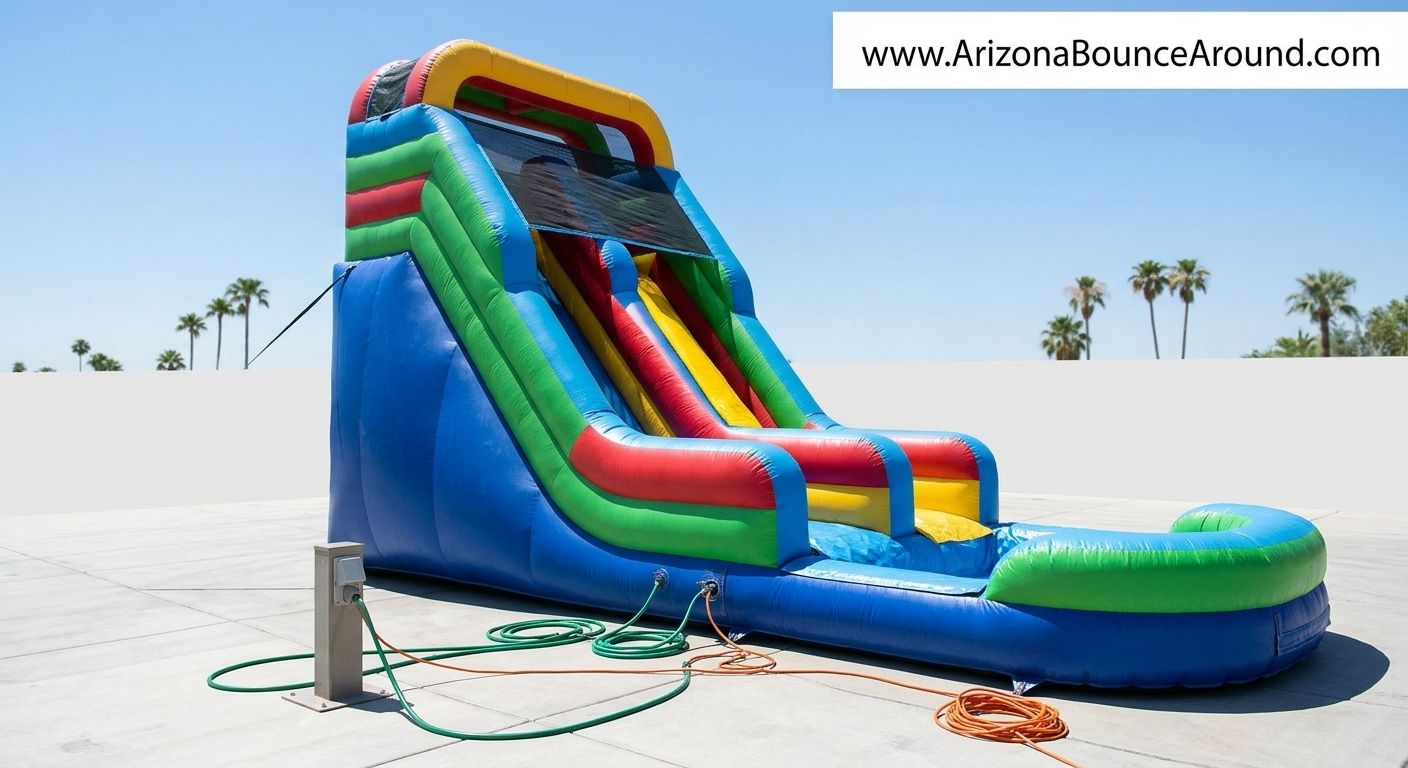
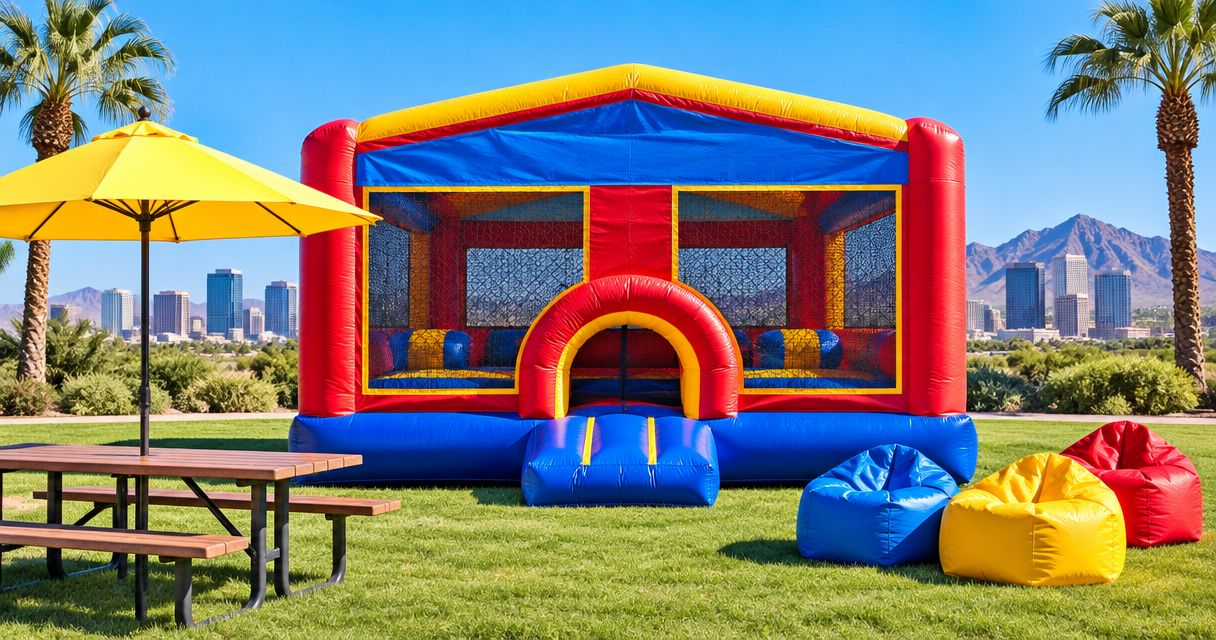
| Bounce house rental | Backyard birthdays and family gatherings with a suitable setup area | Keeps an active-play attraction in one location | Requires equipment-specific space, rider rules and supervision |
| Carnival games | School fairs and community gatherings organized around activity stations | Lets organizers distribute activities across the event | Each station needs space and an agreed staffing plan |
| Obstacle course rental | Company picnics and events centered on active participation | Provides a defined challenge activity | Participant suitability and equipment clearances need review |
For a compact backyard, resolve access before deciding between a train and an inflatable. For a larger school or corporate gathering, compare how each option affects queues, staffing and movement between attractions. Adding activities is useful only when the layout still works.
Common mistakes community organizers make
Choosing a route without checking the delivery entrance
A ride path and a delivery approach are separate planning questions. Show the provider the entrance, gates and unloading area as well as the proposed operating loop. A suitable-looking courtyard does not answer how equipment reaches it.
Advertising rider details before receiving confirmation
Do not publish age limits, passenger capacity, accessibility arrangements or ride duration from another event's listing. Request the details for the equipment being quoted, then use that information in guest communications.
Letting the food queue become the train queue
At school fairs and neighborhood parties, nearby activities can compete for the same waiting space. Mark separate queues on the site map and review their entrances. Keep concession equipment and cables out of the approved route.
Treating volunteers as automatic ride operators
An available volunteer is not a confirmed operator. Establish who runs the equipment, what the provider requires and which tasks event volunteers handle. Queue guidance and equipment operation should not become interchangeable duties by accident.
Adding statewide travel without revisiting the quote
A larger Arizona event needs location-specific delivery and scheduling confirmation. Send the revised address and site details when plans change. Do not assume arrangements discussed for Phoenix apply unchanged to another venue.
FAQ
What should I check before booking a trackless train rental?
Check the proposed route, delivery access and boarding location with the rental provider before booking. Send a site map and photos, then request the equipment requirements and operating responsibilities in writing.
Can a trackless train run on grass or gravel?
Surface suitability depends on the specific train and the provider's operating requirements. Describe the surface accurately, including slopes and uneven areas, and obtain approval rather than assuming it is suitable.
How much space does a trackless train need?
The required space depends on the equipment, turns and boarding arrangement. Ask the provider to review your route and specify clearances; a single open-area measurement does not describe the whole operating path.
Is a trackless train better than a bounce house for a birthday?
A trackless train fits a birthday with an approved route and a planned boarding area; a bounce house fits a suitable stationary play area. Compare access, guest ages and supervision requirements before choosing either attraction.
Who should supervise the boarding line?
Assign boarding-line responsibility explicitly with the provider and event organizer. Confirm who explains rider rules, directs waiting guests and communicates with the operator when boarding needs to pause.
What should Phoenix event planners ask about hot weather?
Ask the provider about weather-related operating rules and plan shade and drinking-water access for waiting guests. Keep shade structures outside required operating clearances and agree on who communicates any pause.
What should I send Arizona Bounce Around for a rental inquiry?
Send Arizona Bounce Around the event date, exact location, schedule, guest age groups and proposed route information. Ask which equipment can be quoted and confirm delivery, setup, operation and venue requirements before advertising the ride.
One last thing
Walk the route again after the other activities are set up. The map you approved before delivery does not show a newly parked vehicle, a moved table or a concession queue. Make that final comparison part of your opening routine, and refer any change to the operator before the ride begins.